
From the field
Technical deep-dives, funding insights and project retrospectives from our engineering and research teams.
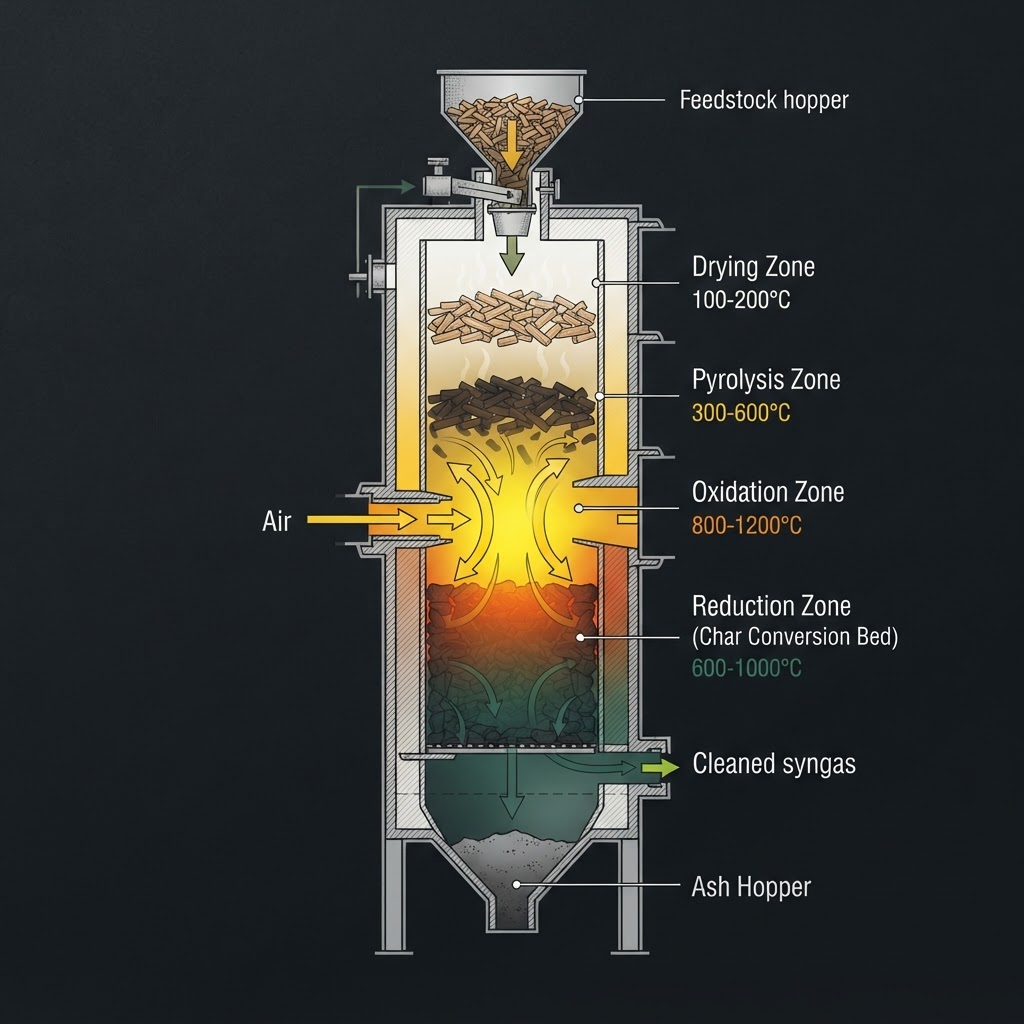
Biomass Gasification Temperature: Ranges by Zone and Reactor
Biomass gasification temperature by zone and reactor type, why most plants run at 800 to 900°C, and how tar and ash melting set the limits.
Read note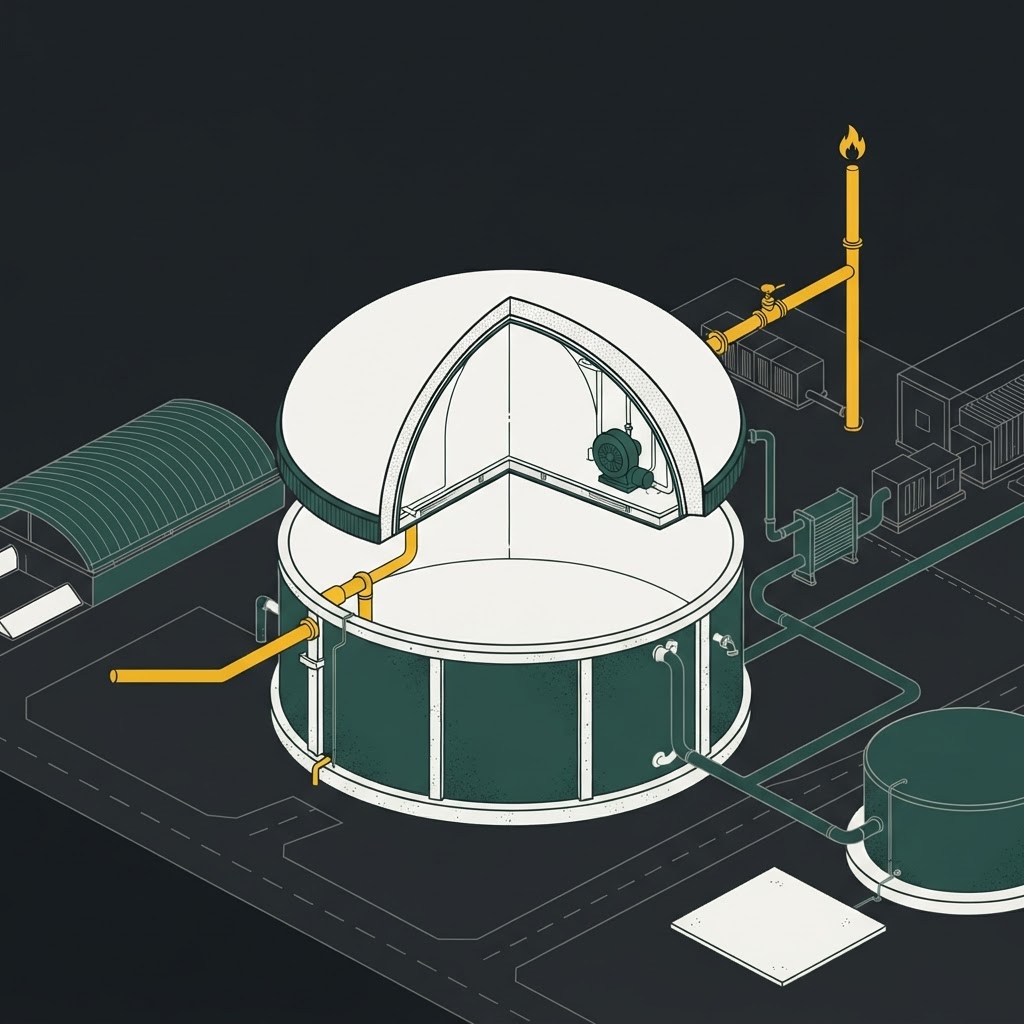
Biogas Storage Tank Price: Bags, Balloons, Membrane Domes
Biogas storage tank price by type: N18,000 Nigerian bags, Rs 5,300 1 m3 balloons, EUR 11,700 to 186,800 membrane domes, plus how much storage you need.
Read note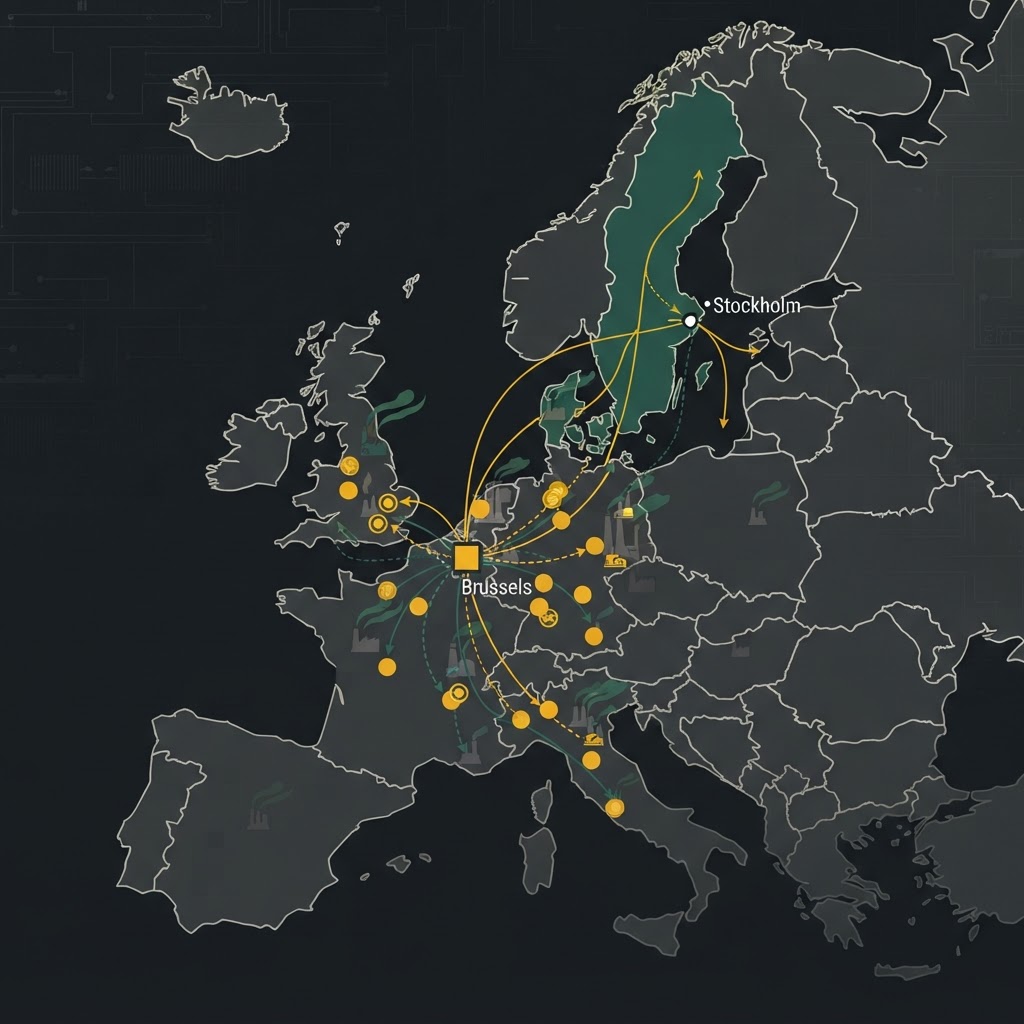
Carbon Credit Buyers in Europe: Who Buys in 2026
Carbon credit buyers in Europe mapped: corporates, Nordic states, Stockholm, the EU CRCF Buyers Club and why EU ETS emitters cannot buy offsets.
Read note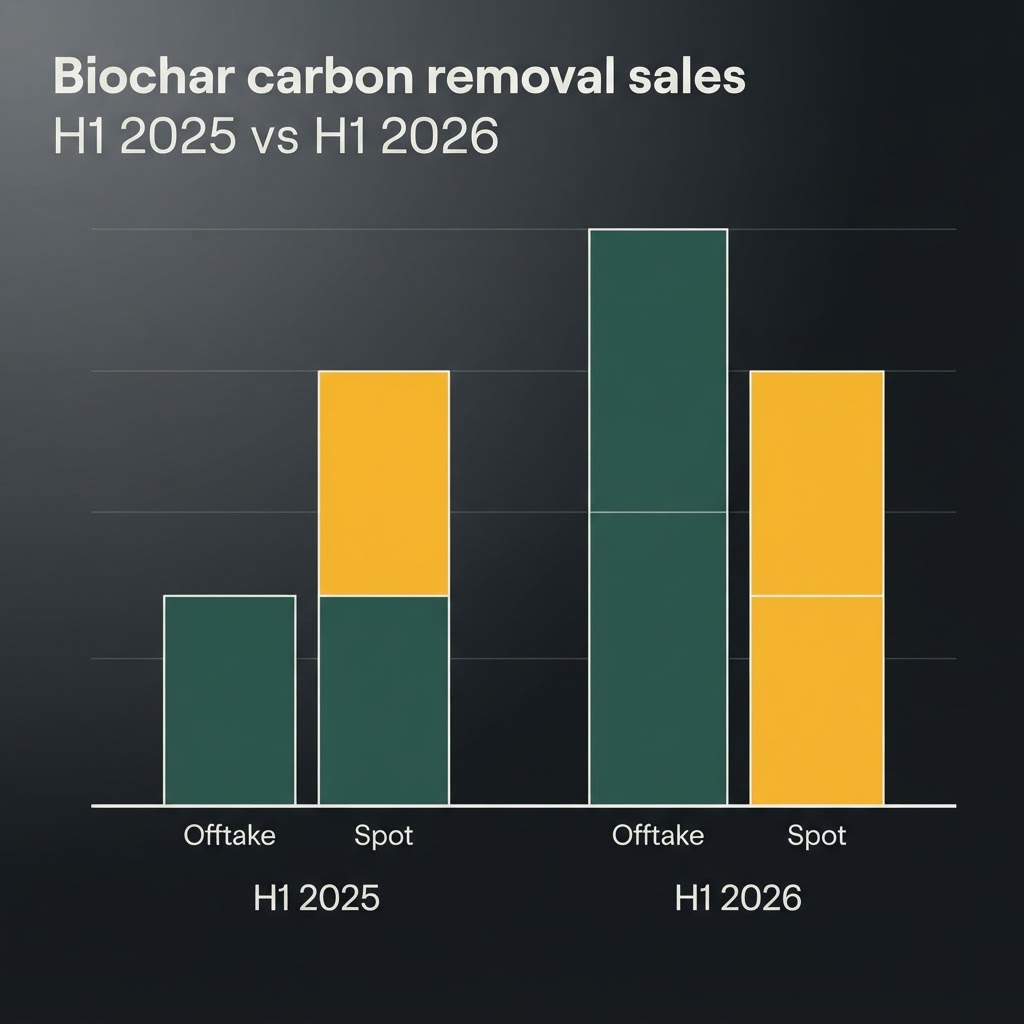
Biochar Carbon Credit Buyers: Who Buys and What They Pay
Who the biochar carbon credit buyers are in 2026, how much they contract, what they pay per tonne and which projects pass their vetting.
Read note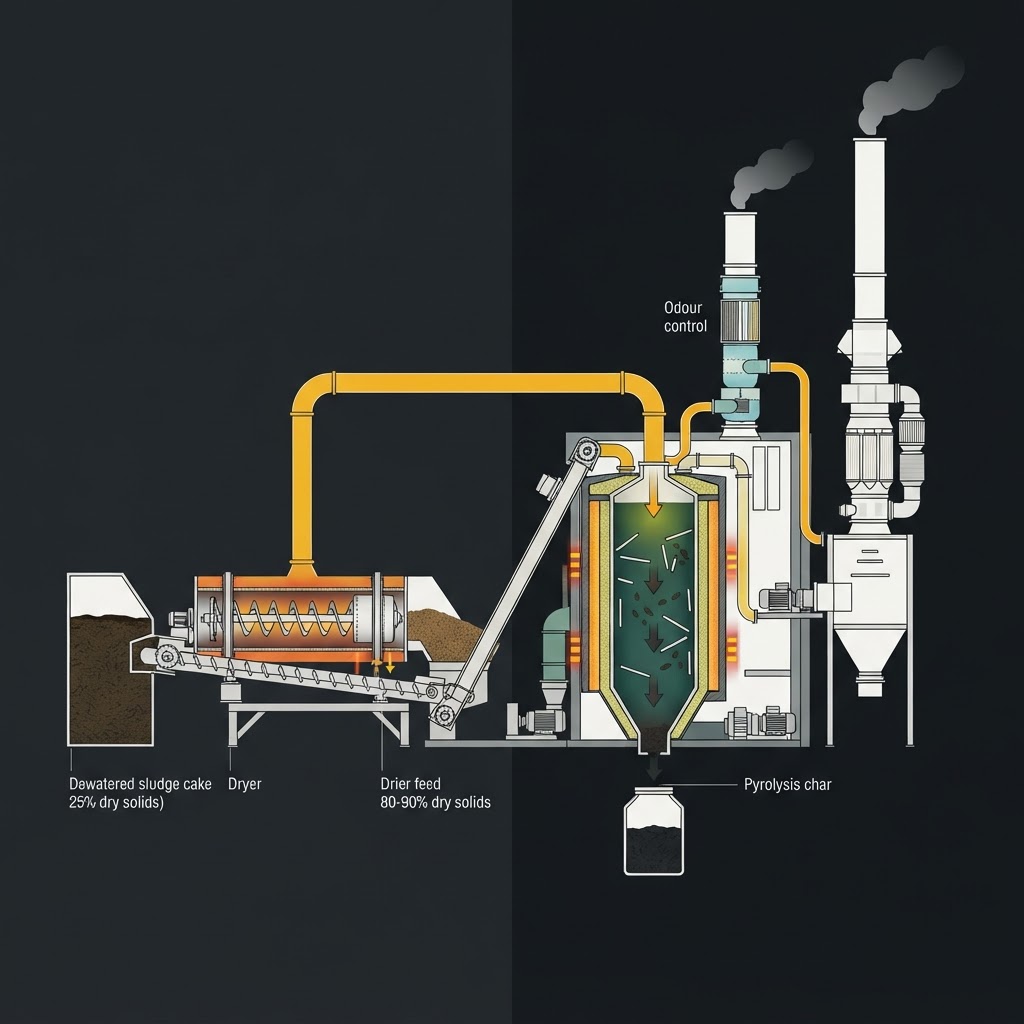
Sewage Sludge Pyrolysis Plant: Capacity, Footprint, Cost
Sewage sludge pyrolysis plant sizing: reference plants, tonnes per unit, footprint, drying duty, permits and what published projects actually cost.
Read note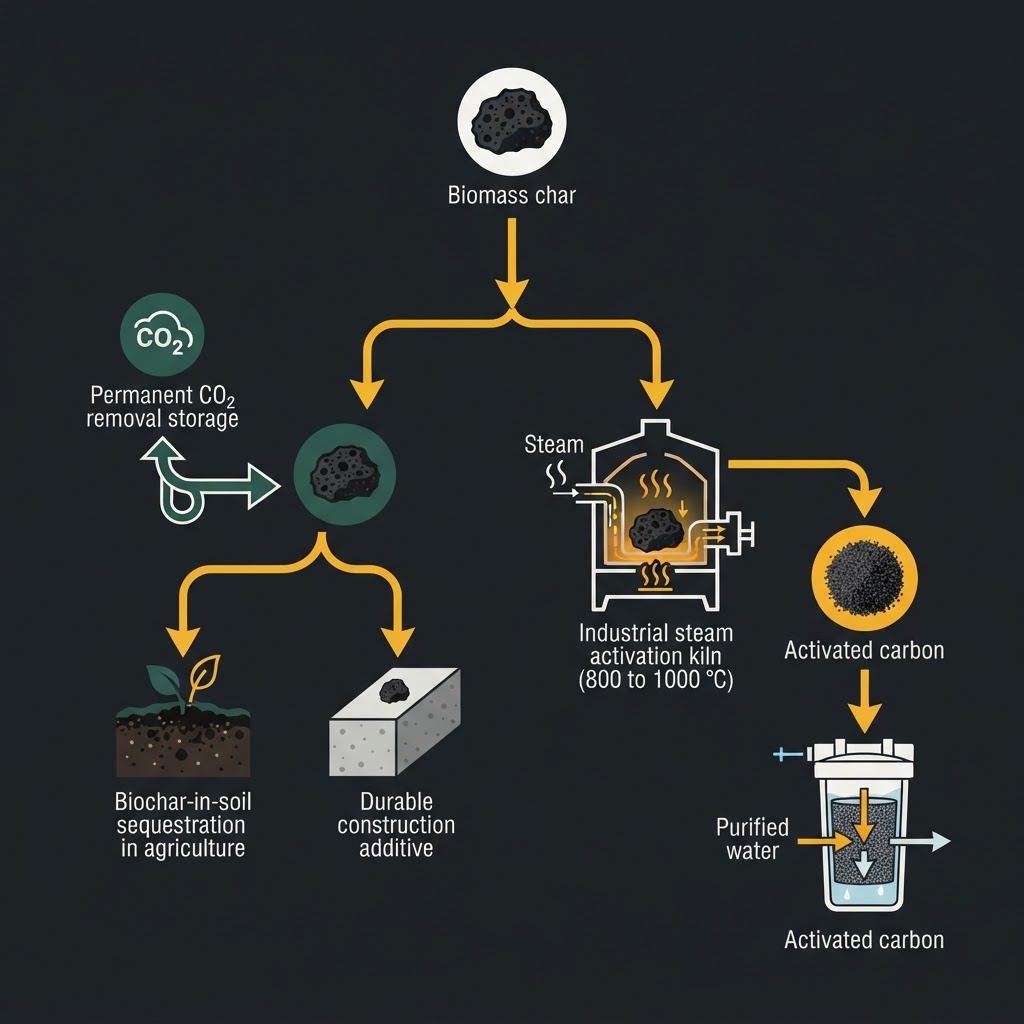
Biochar vs Activated Carbon: Same Char, Two Products
Biochar vs activated carbon in measured numbers: surface area, activation temperature, energy, CO2 footprint, adsorption cost and carbon removal.
Read note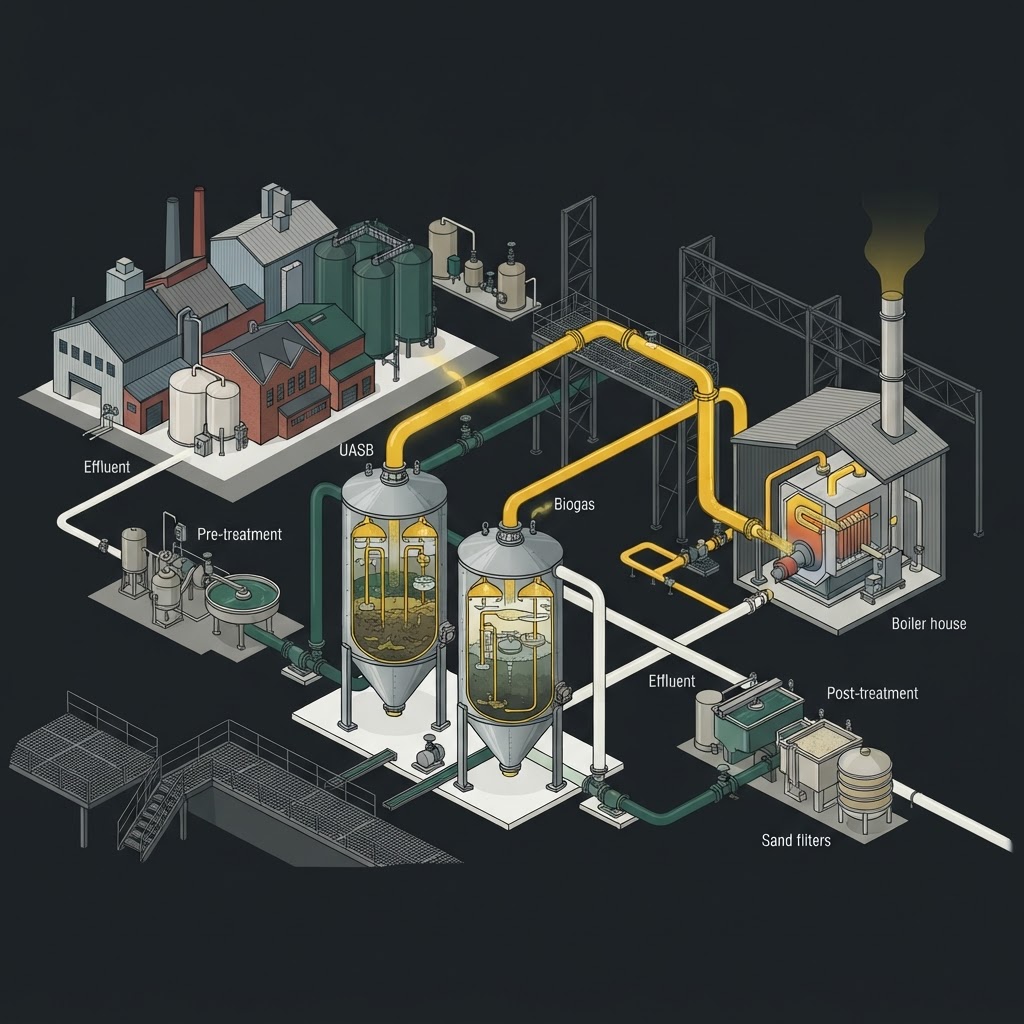
Biogas Plant for Industrial Use: Which Waste Streams Pay
A biogas plant for industrial use pays on wet, high-COD waste. Reactor choice, real plants from Lagos to Indonesia, and when gasification wins instead.
Read note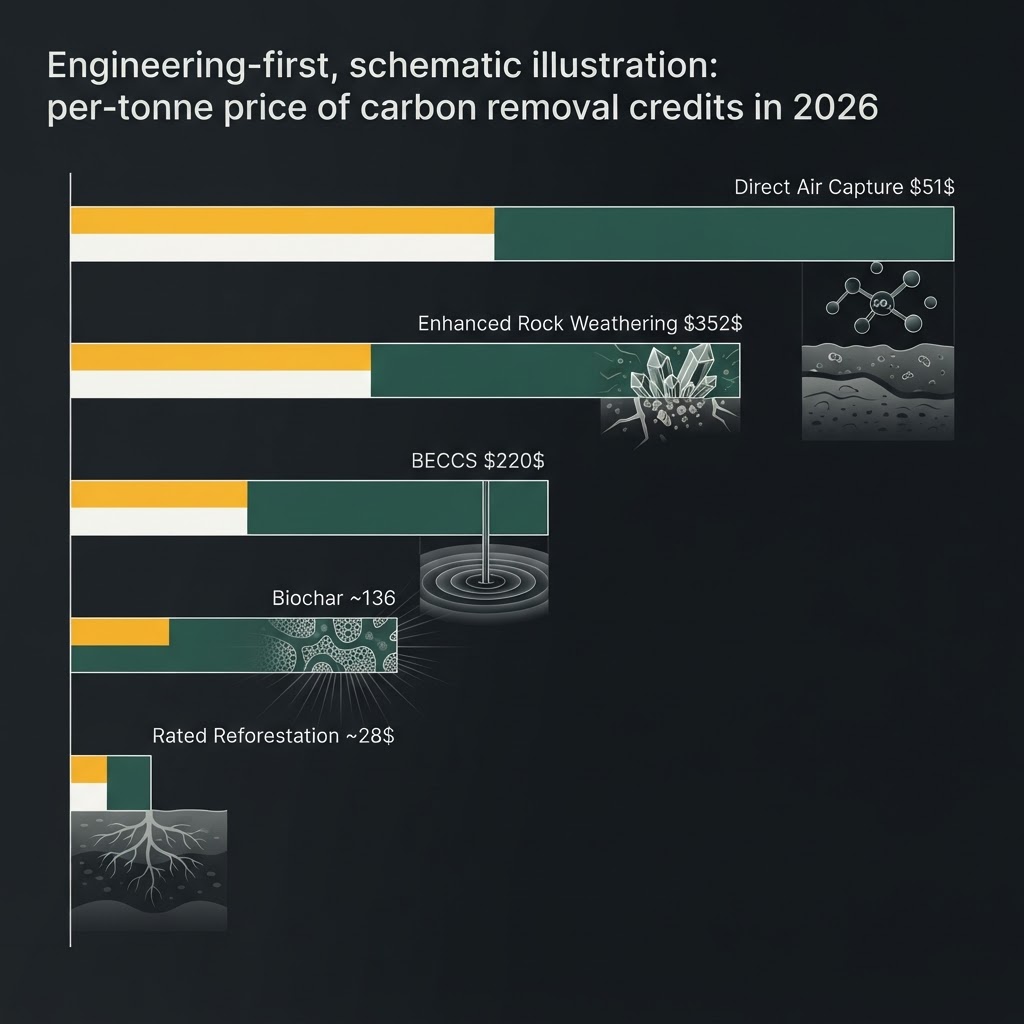
Cost of Carbon Removal Credits in 2026, by Method
The cost of carbon removal credits runs from about 28 dollars for rated reforestation to over 500 for direct air capture. What each method costs and why.
Read note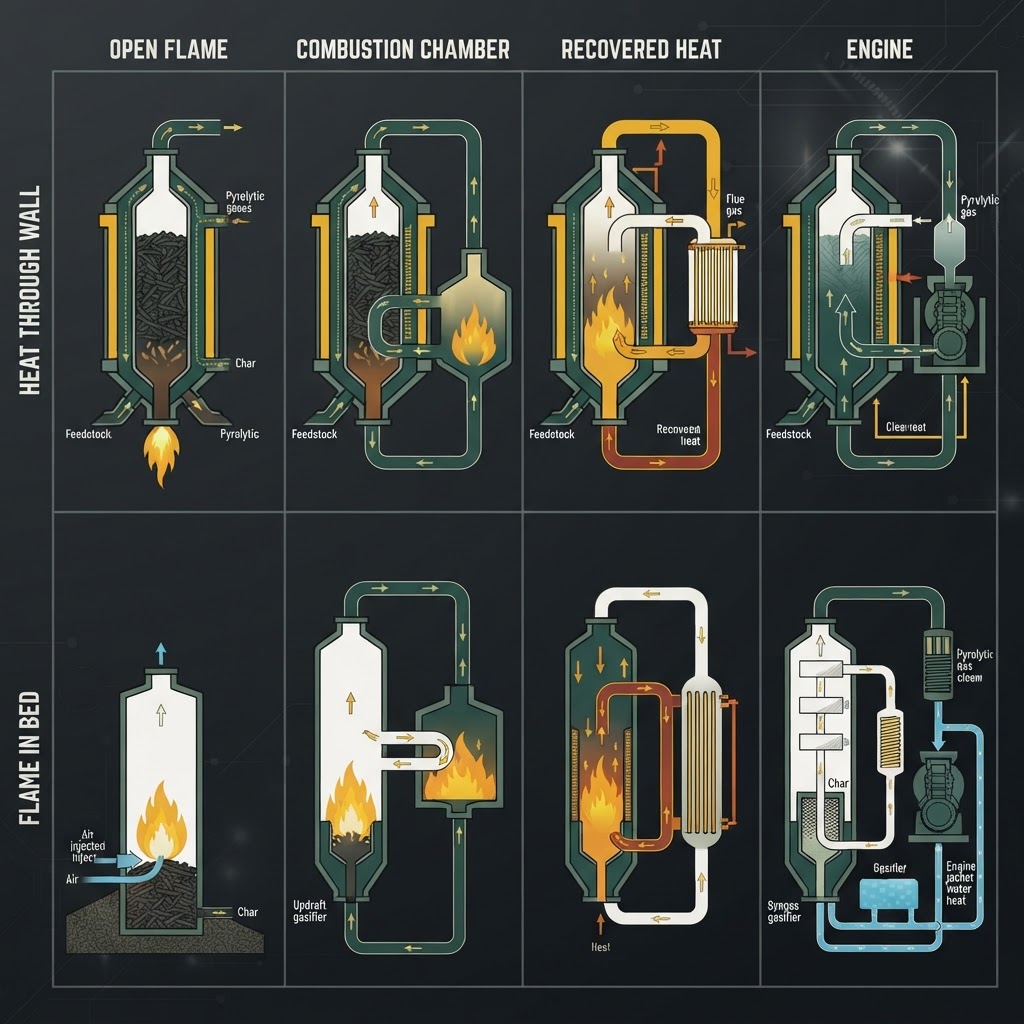
Biochar Reactor Guide: Kilns, Retorts and Continuous Units
Biochar reactor types compared: kilns, retorts, drums, augers and gasifiers, with yields, throughput, costs and EBC limits, and how to pick one.
Read note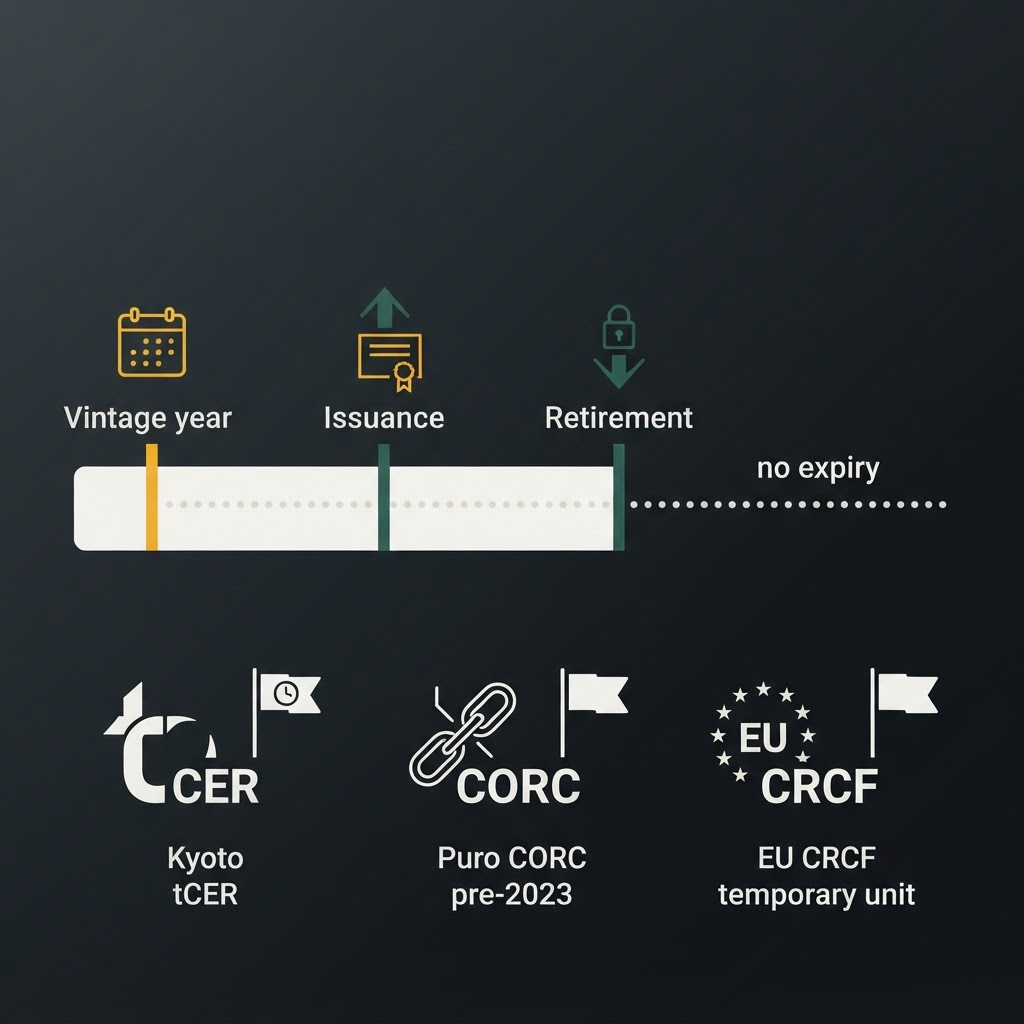
Do Carbon Credits Expire? Vintages, Retirement, Shelf Life
Do carbon credits expire? Most never do, but Puro CORCs did until 2023 and EU CRCF units still do. The vintage rules and price cliffs that set shelf life.
Read note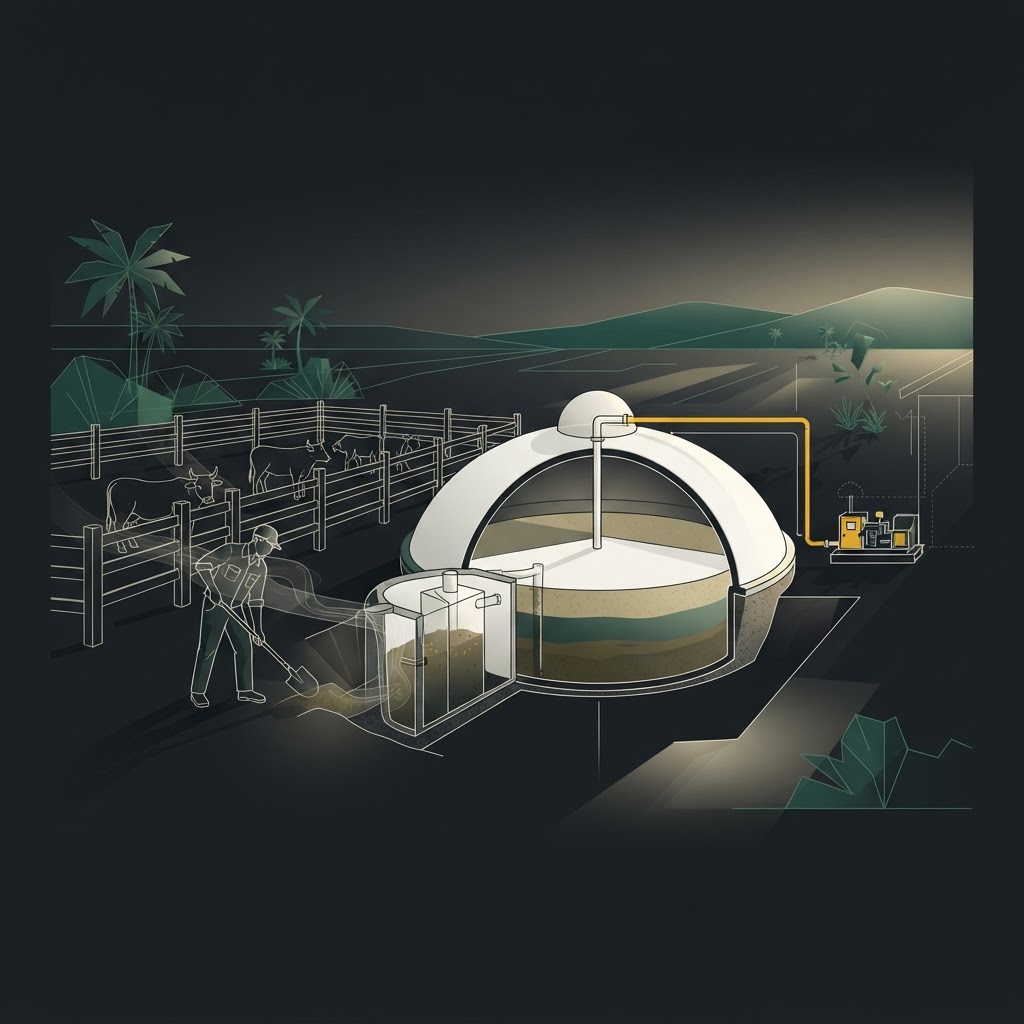
Biogas Production in Nigeria: Potential vs Real Plants
Biogas production in Nigeria: 32 billion m3 of yearly potential, a handful of running digesters. Feedstock, real projects and why so few plants scale.
Read note
Biochar Gasifier: Power and Carbon Removal in One Reactor
Biochar gasifier buyer's guide: real char yields (5 to 25%), kW per kg of feed, EBC and PAH limits, and the questions to ask a vendor before you sign.
Read note
Biochar Disadvantages: 8 Real Limits and What Fixes Them
Biochar disadvantages with numbers: yield loss, contaminants, albedo, process emissions and cost. Which ones a plant can fix and which it cannot.
Read note
Biogas Upgrading to Biomethane: How It Works and What It Costs
Raw biogas is a mediocre fuel. Upgraded to biomethane it is pipeline-grade gas. Here are the four separation routes, real cost tiers, and when upgrading pays instead of burning biogas on site.
Read note
Biochar Quality Standards: EBC, IBI and Registry Limits
Biochar quality standards compared: EBC classes, IBI test categories, EU CMC 14 limits and the H/Corg, PAH and sampling rules carbon registries enforce.
Read note
Biochar in Concrete: Dosage, Strength and Carbon Credits
Biochar in concrete works at 1 to 5 percent of cement. What it does to strength, how much CO2 it stores, and how registries credit it. Numbers cited.
Read note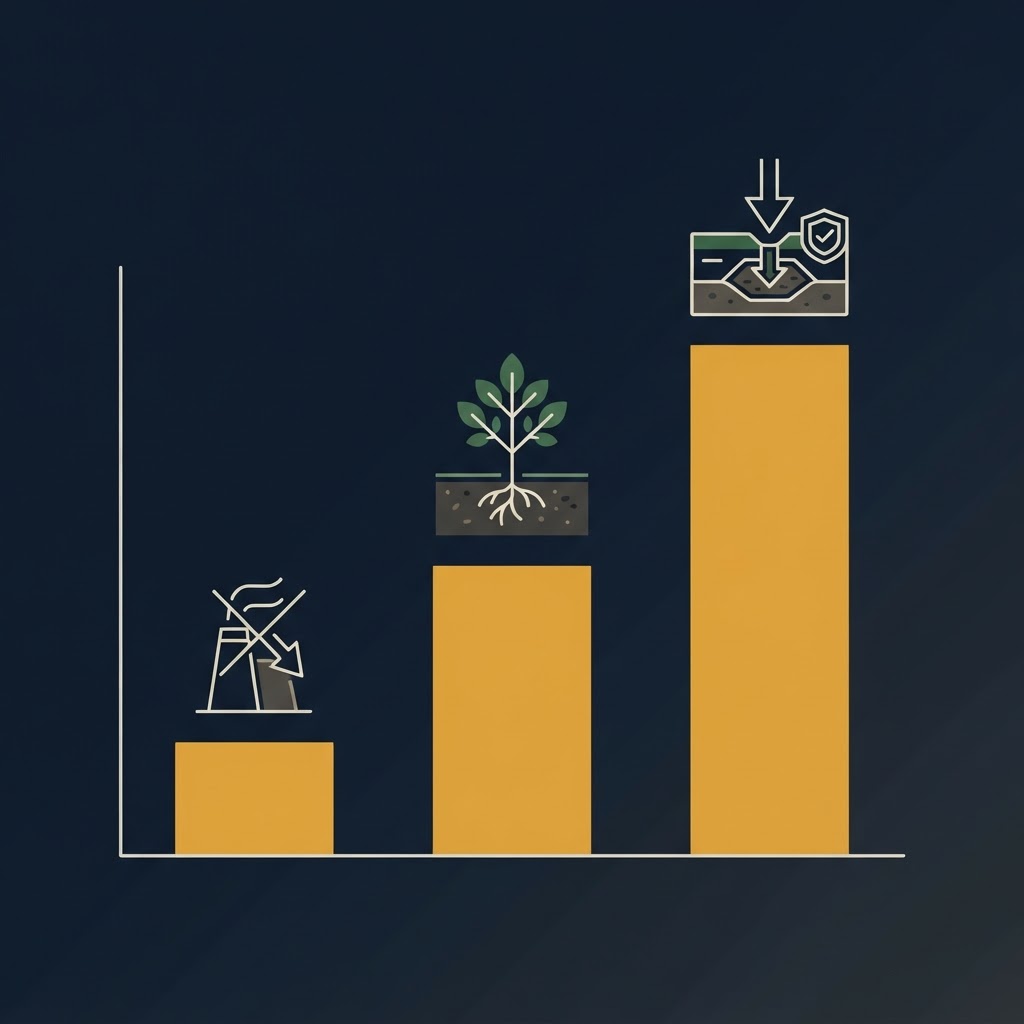
Avoidance vs Removal Carbon Credits: The 5x Price Gap
Avoidance vs removal carbon credits: $4 vs $19.50 a tonne, $120+ for durable removal. What each lets you claim under SBTi and why the gap holds.
Read note
How Long Does Biochar Store Carbon? 100, 200 or 1,000 Years
How long does biochar store carbon? Science says centuries, registries credit 200+ years, the inertinite camp says millennia. What sets your number.
Read note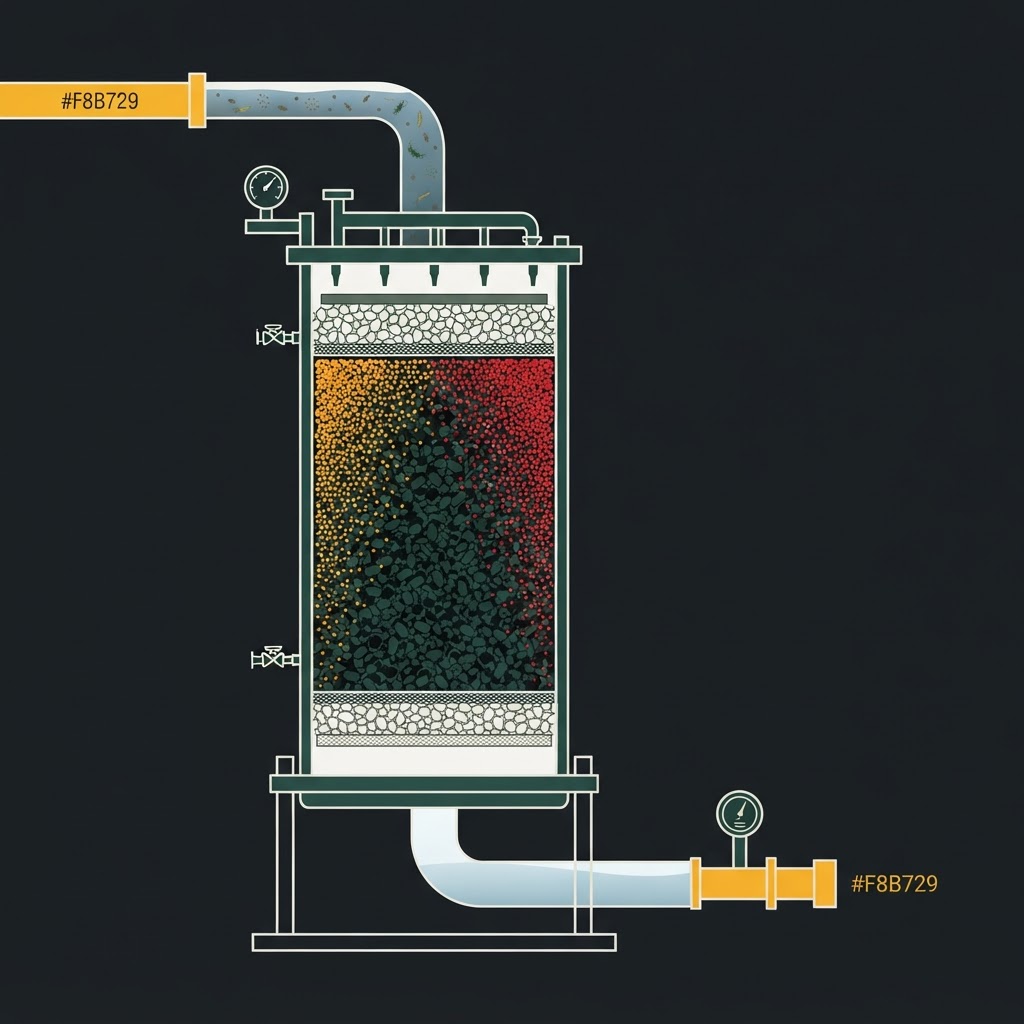
Biochar Wastewater Treatment: What It Removes and Misses
Biochar wastewater treatment in measured numbers: phosphorus, metal and pharmaceutical removal, pyrolysis temperature, where sludge biochar fits.
Read note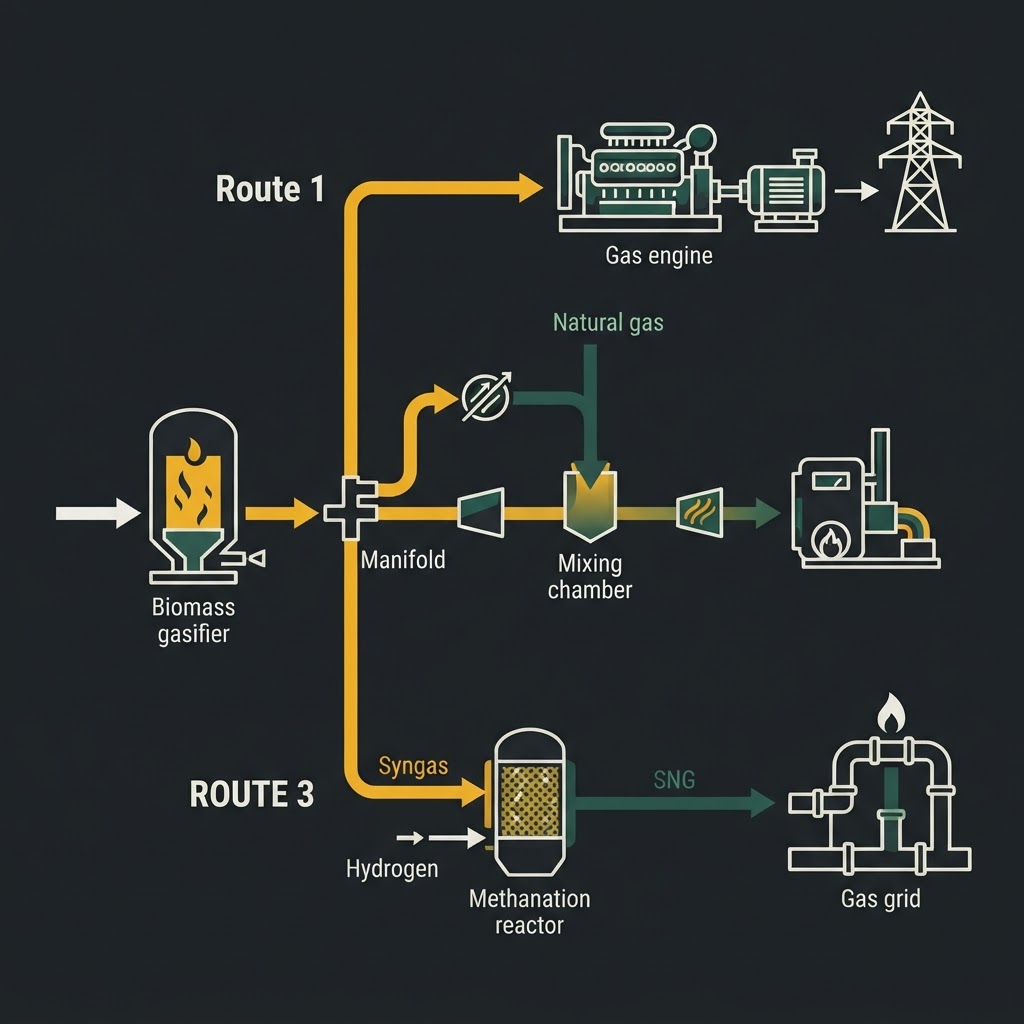
Can Syngas Replace Natural Gas? Where It Works and Where Not
Can syngas replace natural gas? Partly. Heating values, the 15 percent blend limit for burners, engine derating, and what bio-SNG really costs.
Read note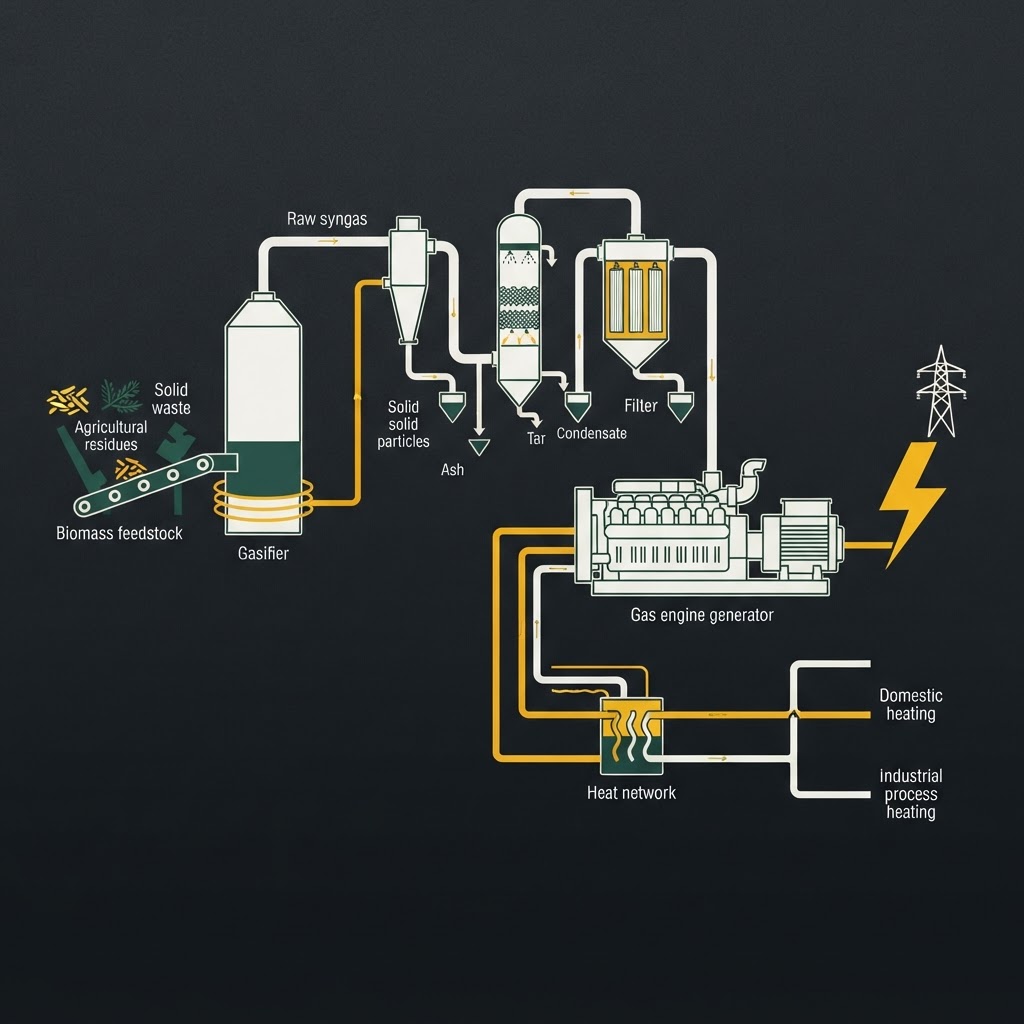
Can Syngas Be Used to Generate Electricity? Yes, If
Can syngas be used to generate electricity? Yes. Which engines run on it, how much power they lose, the tar limits to meet and real efficiencies.
Read note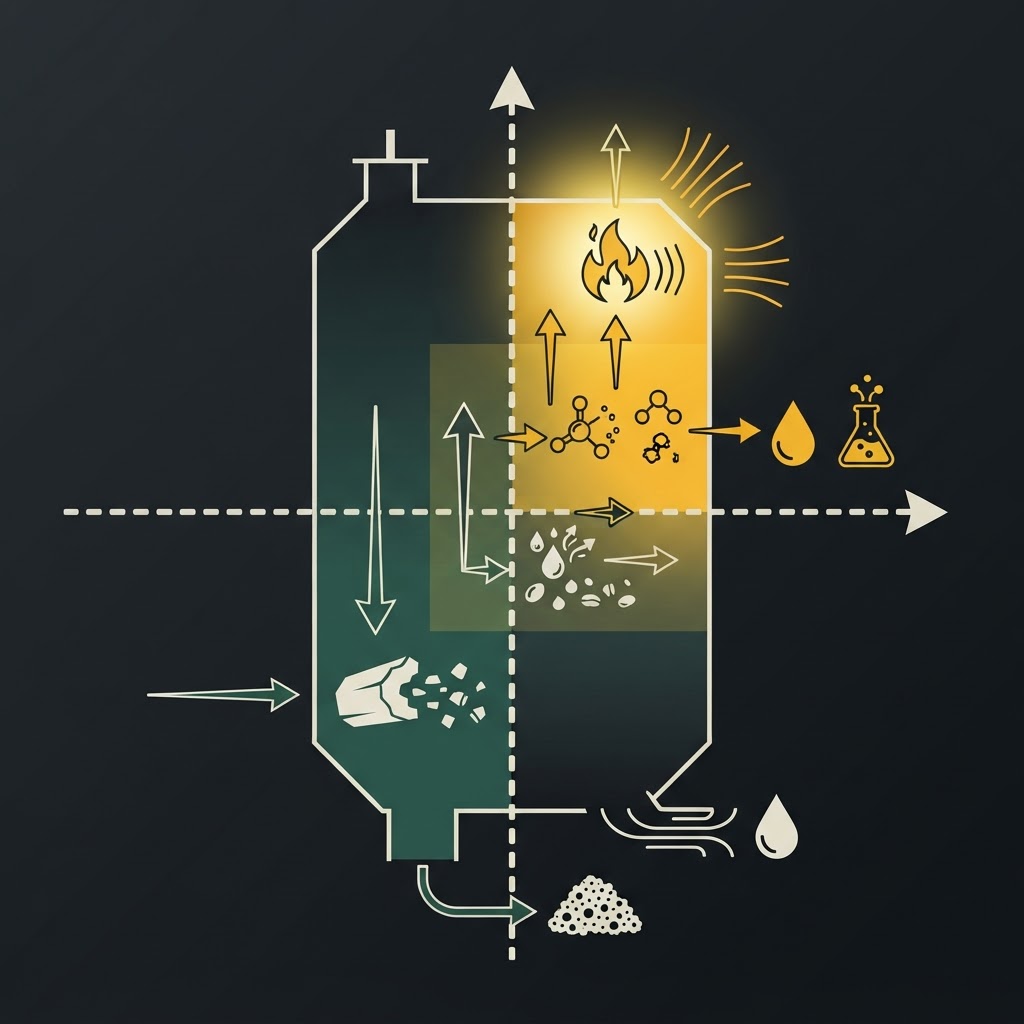
Pyrolysis vs Gasification: Pick the Route by Revenue
Pyrolysis vs gasification compared on oxygen, temperature, yields, char, gas quality and cost, plus a rule for choosing by the product that pays.
Read note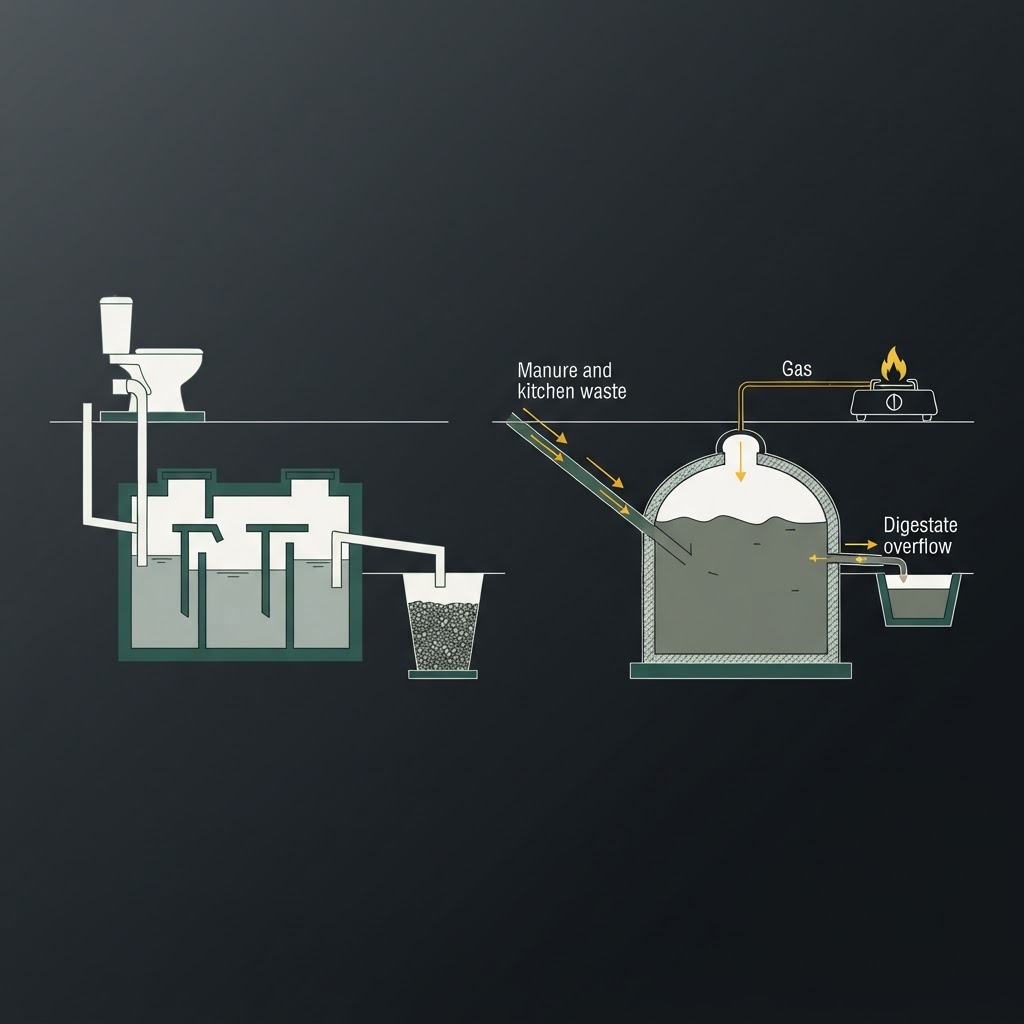
Biodigester vs Biogas Digester: Sanitation or Energy?
Biodigester vs biogas digester: one treats toilet wastewater, the other makes fuel. Why a sewage biodigester gives little gas and how to read a quote.
Read note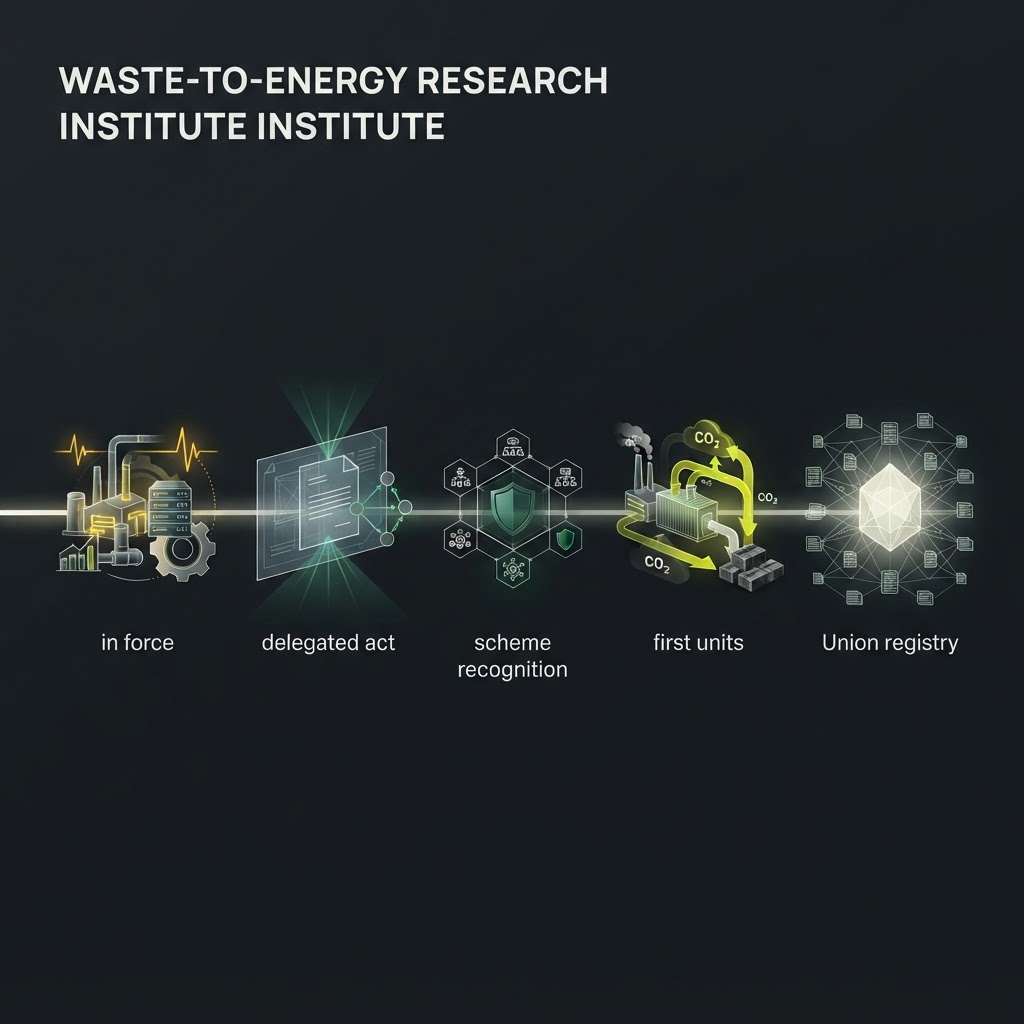
CRCF Permanent Carbon Removal Credits: Biochar Guide 2026
CRCF permanent carbon removal credits explained: what the EU rules demand of a biochar plant, the H/Corg limit, heat use, and when the first units arrive.
Read note
Biochar Yield Calculation: 5 Formulas, One Worked Example
Biochar yield calculation on a dry, ash-free, fixed carbon, carbon and energy basis, with one worked example and the ash trap that inflates sludge char.
Read note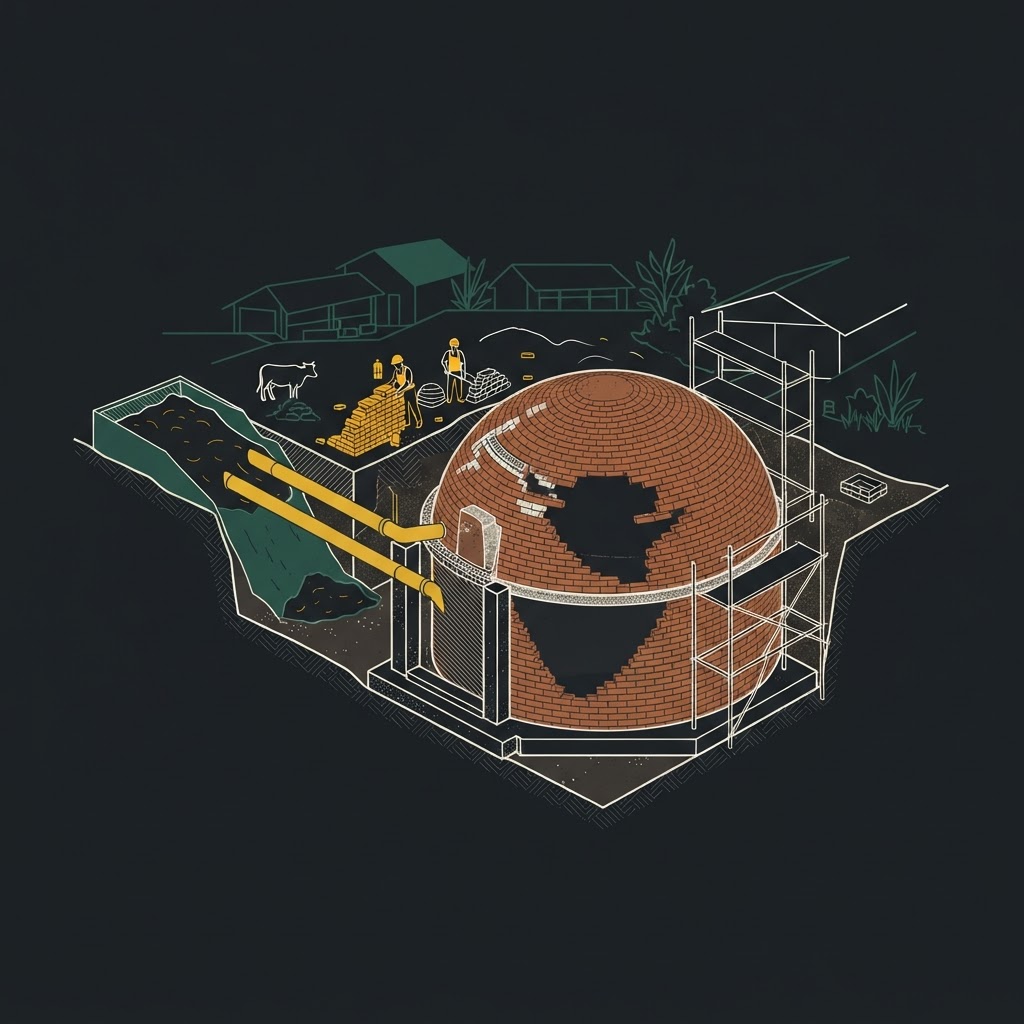
Cost of a Biogas Plant in Nigeria: 4 Tiers, Real Numbers
Cost of a biogas plant in Nigeria, from N350,000 household units to N43.65 million commercial digesters, with payback data from Nigerian projects.
Read note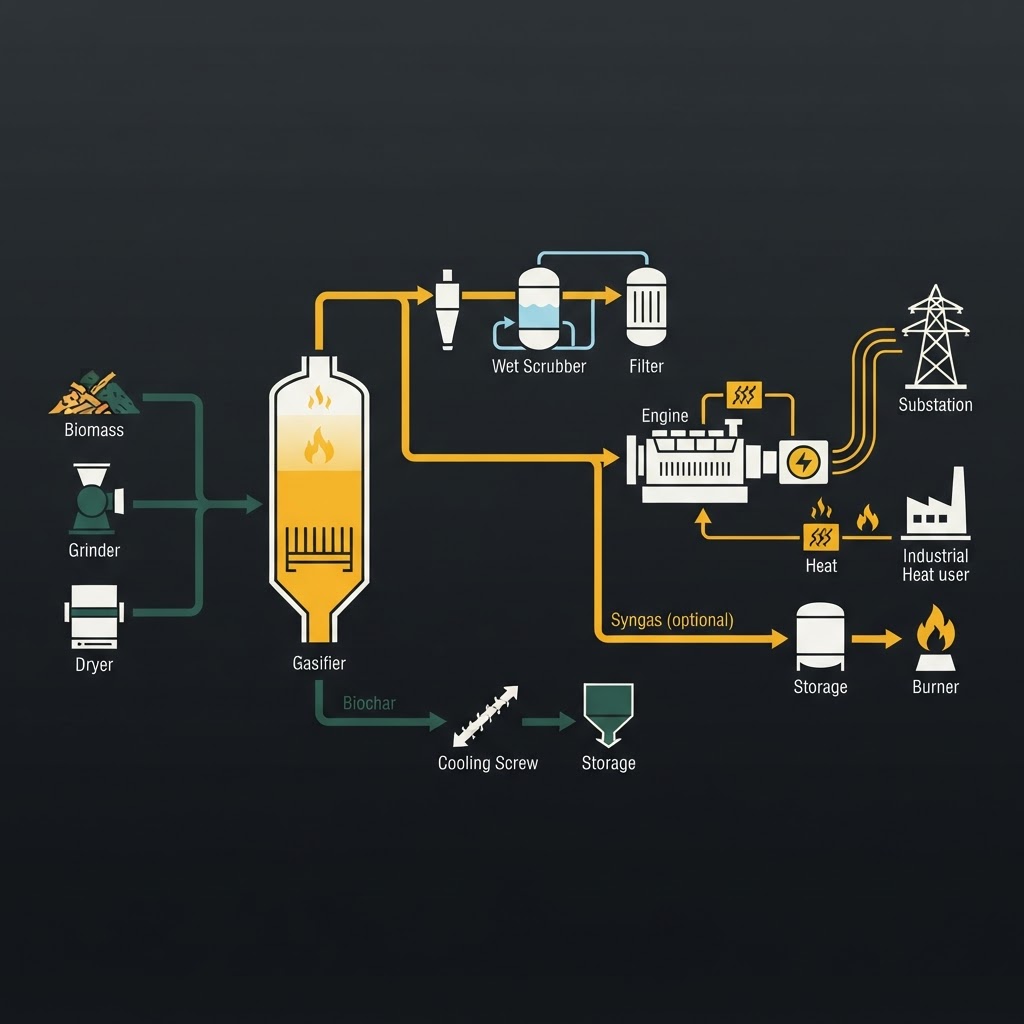
What Is Biomass Gasification? Definition, Outputs, Uses
What is biomass gasification? A plain definition, what it produces (syngas, power, heat, biochar), where it works, and the limits vendors skip.
Read note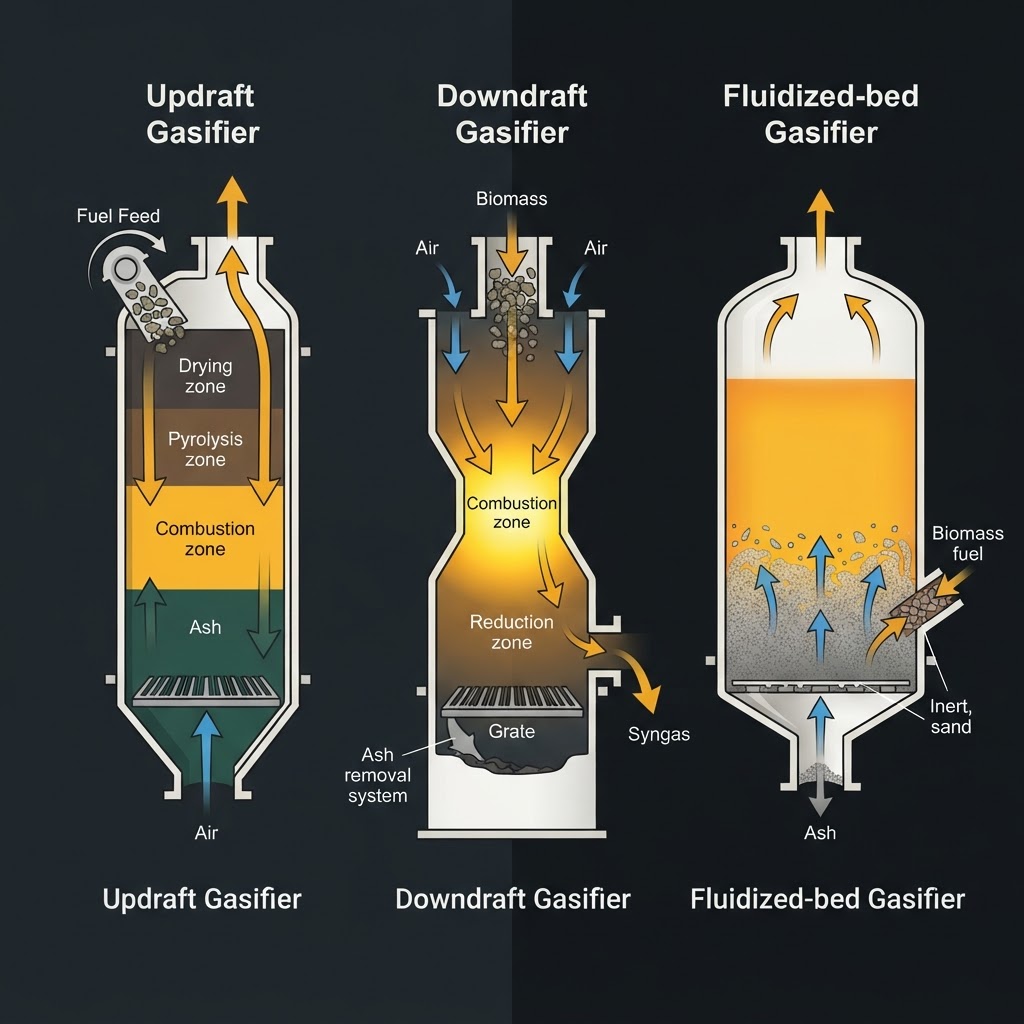
Types of Biomass Gasifiers: Matching Reactor to Feedstock
Types of biomass gasifiers compared: updraft, downdraft, cross-draft, fluidized bed, entrained flow and plasma, with tar, moisture and scale limits.
Read note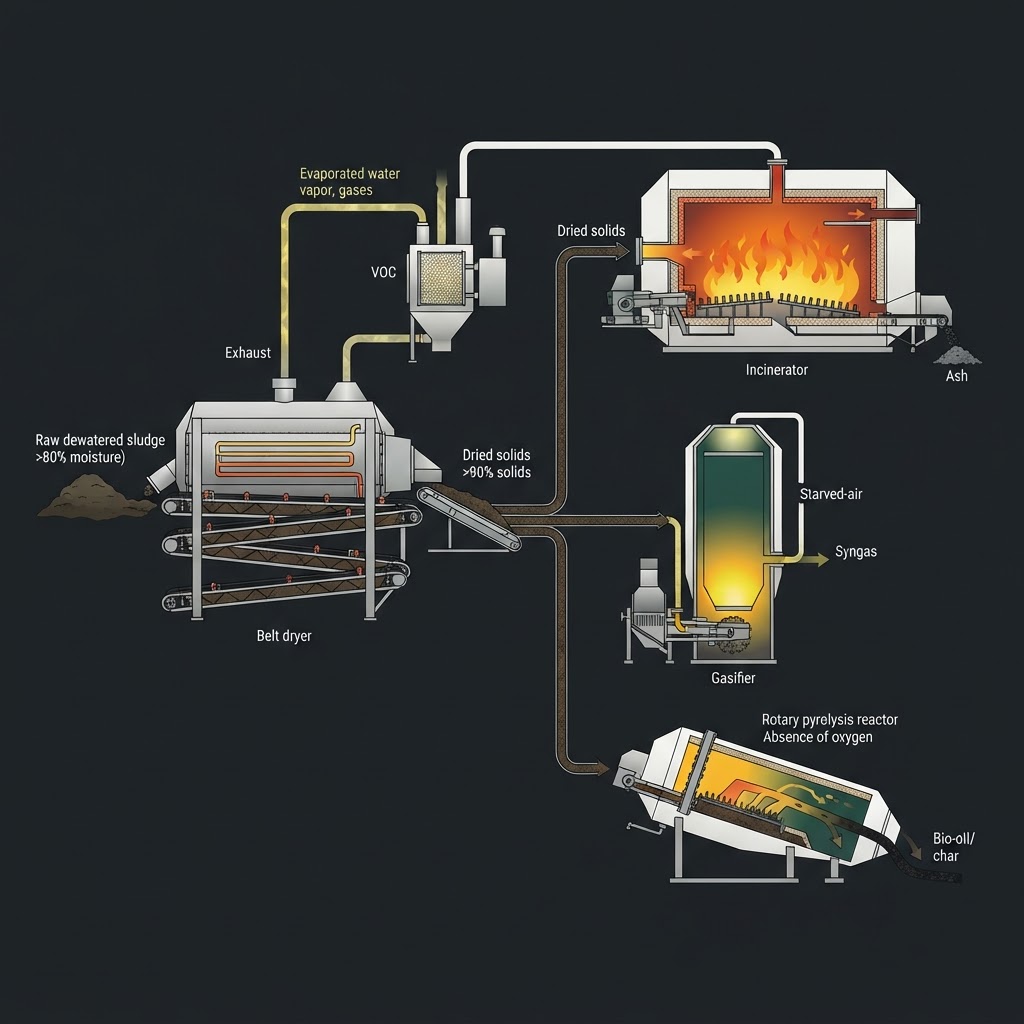
Thermal Treatment of Sewage Sludge: Routes and Real Costs
Thermal treatment of sewage sludge compared: incineration, gasification, pyrolysis and HTC, the German 2029 rules, and why drying decides the cost.
Read note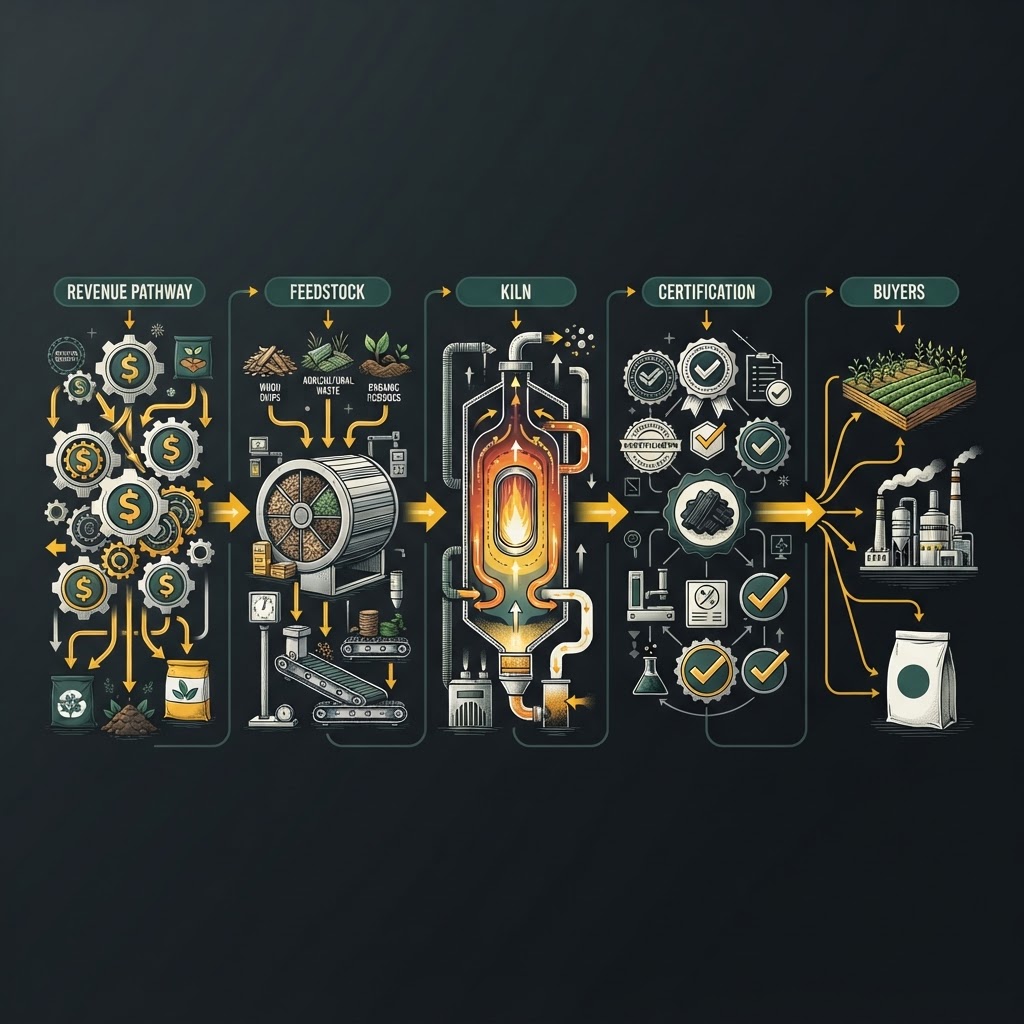
Starting a Biochar Business: The Order of Decisions
Starting a biochar business? Pick your revenue pathway and certification first. Kiln costs from EUR 200 to 5M, EBC rules, feedstock and buyers.
Read note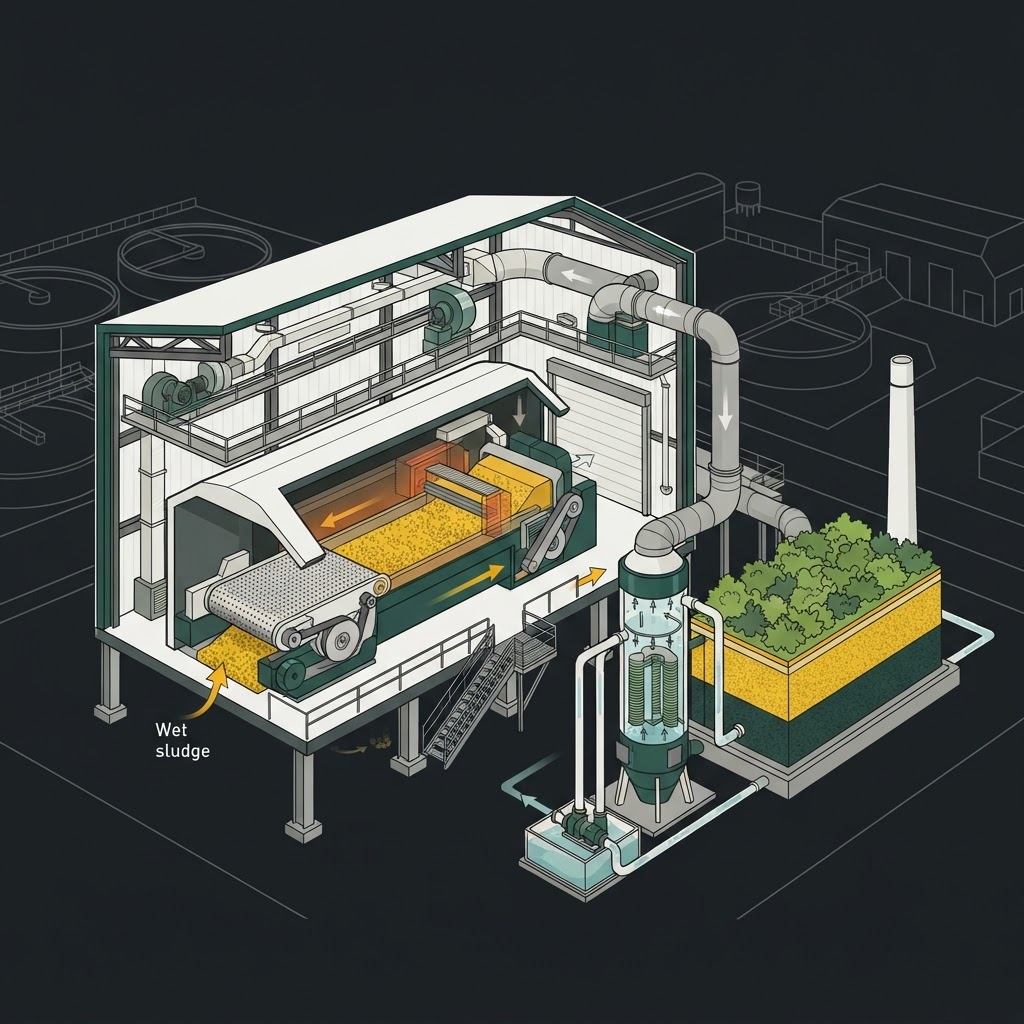
VOC Emissions From Sludge Drying: What Leaves the Dryer
VOC emissions from sludge drying: which compounds leave the dryer, where temperature switches new ones on, and the exhaust trains that meet TA Luft.
Read note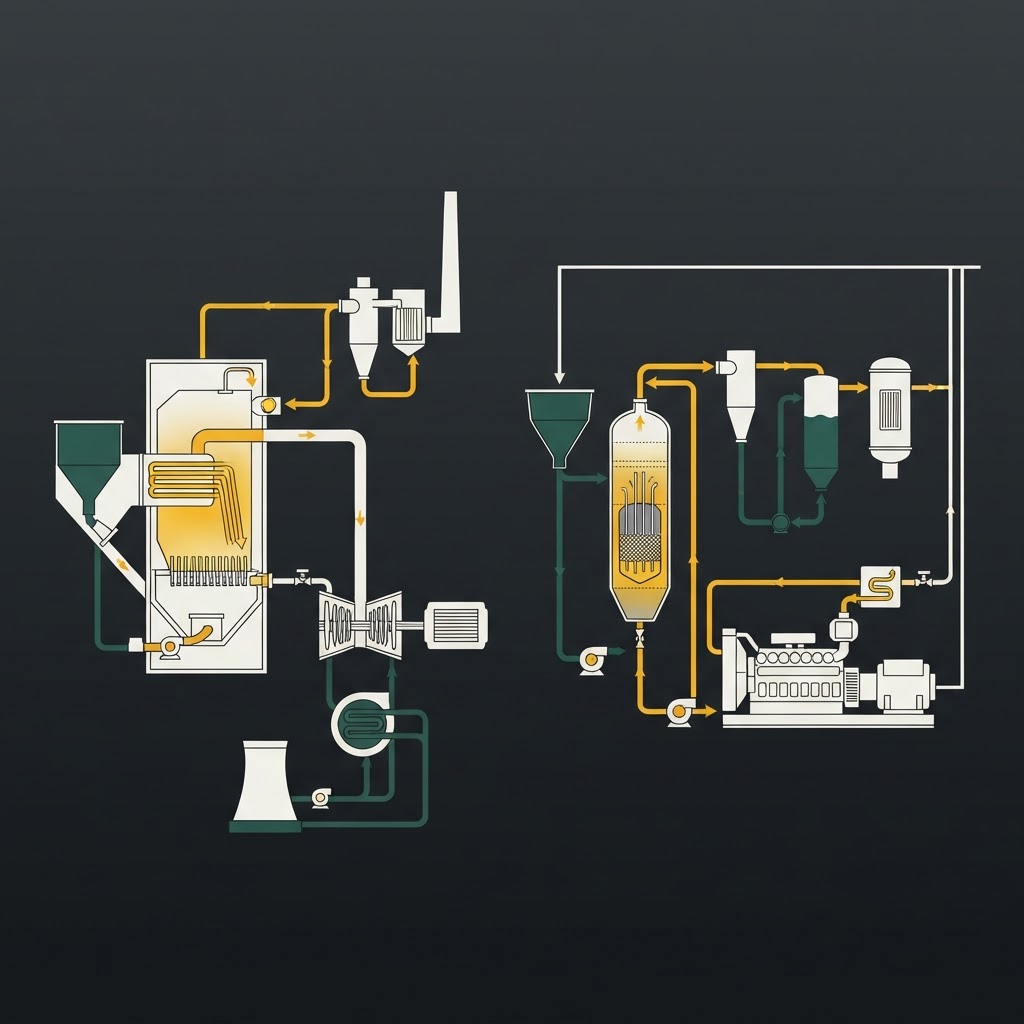
Biomass Gasification vs Combustion: Efficiency, Emissions
Biomass gasification vs combustion compared on efficiency, NOx, life cycle impact and cost, plus the three questions that decide which one fits a site.
Read note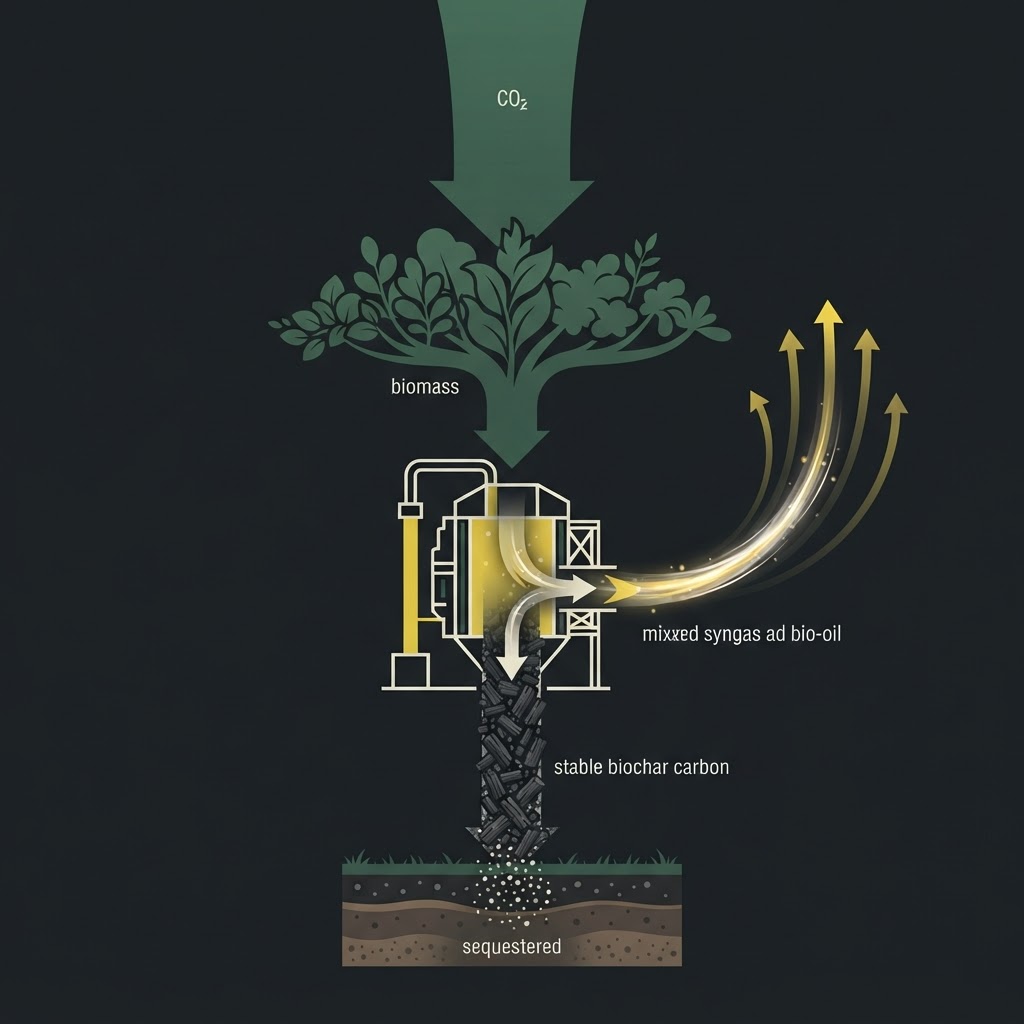
How Biochar Removes CO2 From the Air, Atom by Atom
How biochar removes CO2 from the air: photosynthesis, pyrolysis and storage, where each tonne of carbon goes, and why only the stable fraction counts.
Read note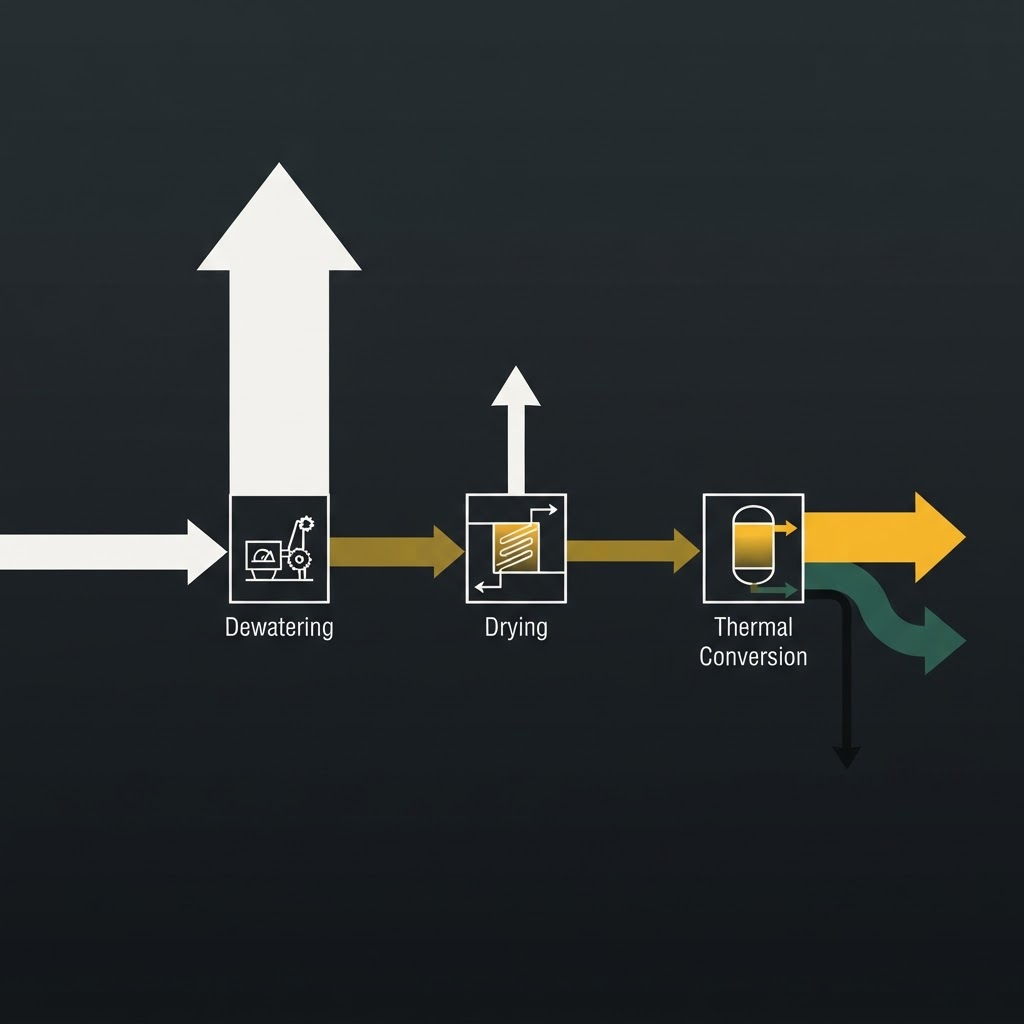
Sewage Sludge to Energy: Power, Heat and Biochar
Sewage sludge to energy works when you manage the water first. How digestion, incineration and gasification compare, and what German law now decides.
Read note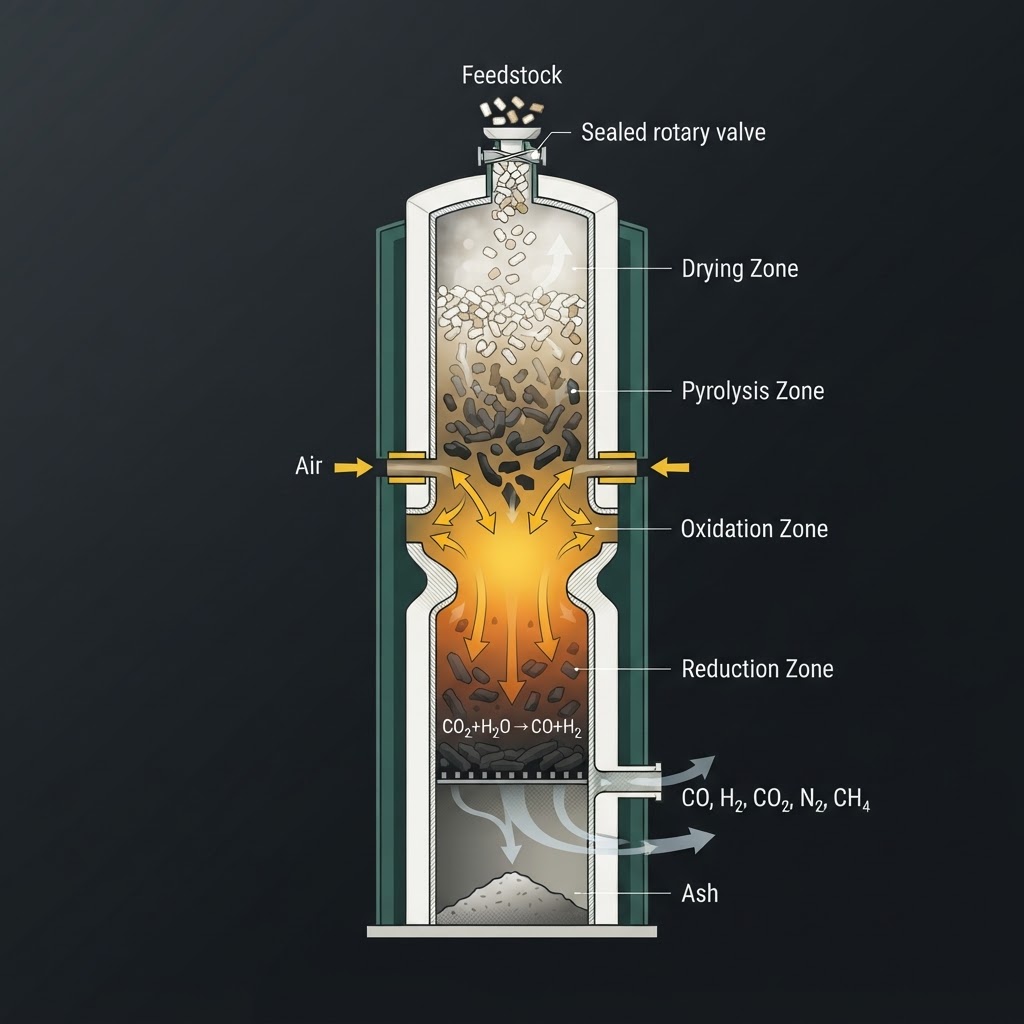
How Biomass Gasification Works: The 4-Stage Process
Biomass gasification explained stage by stage: drying, pyrolysis, oxidation, reduction, and why pre-treatment decides if a gasifier works.
Read note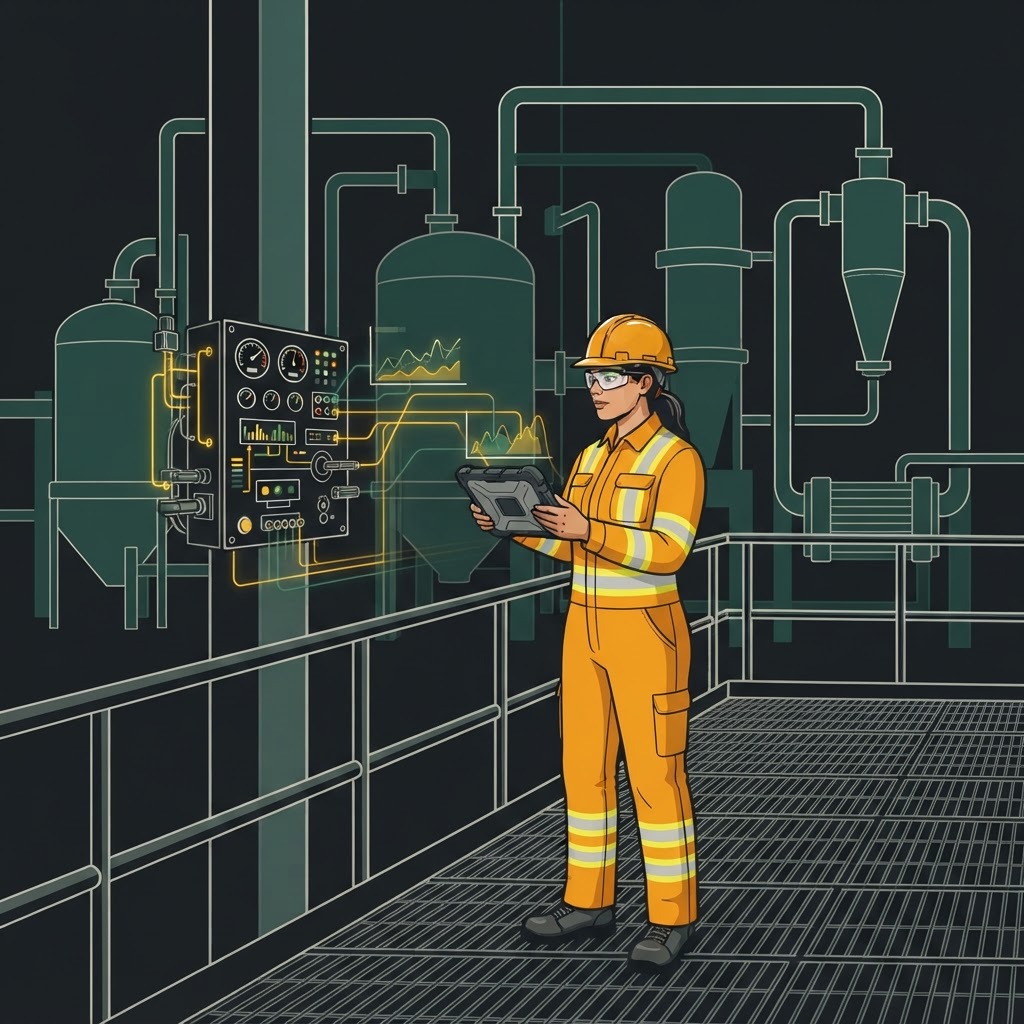
How Are Carbon Credits Verified? The MRV Chain
How are carbon credits verified? Not by one audit but by a chain of gates: validation, monitoring, VVB verification, registry review, issuance, retirement.
Read note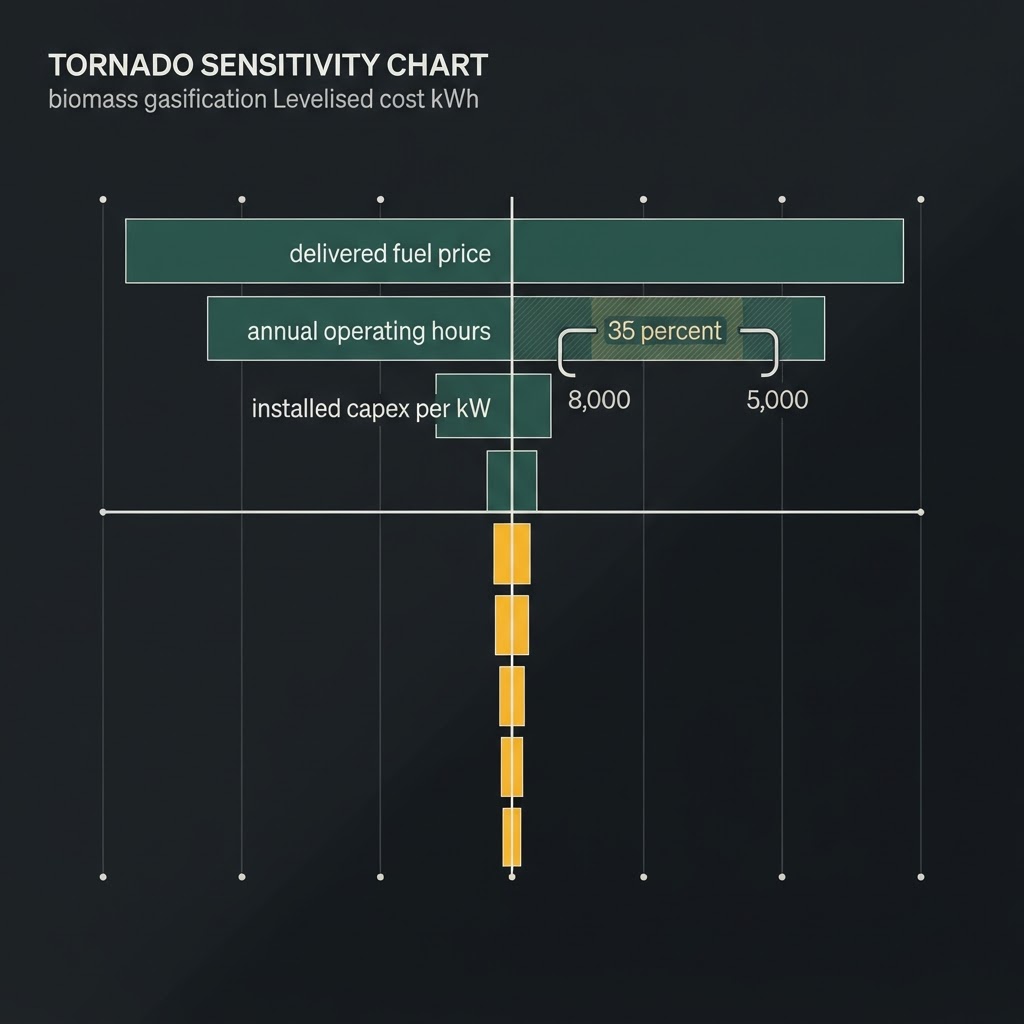
Biomass Gasification Cost: Capex, Fuel and Cost per kWh
What biomass gasification costs: installed capex per kW, delivered fuel price, opex conventions and the operating hours that decide the cost per kWh.
Read note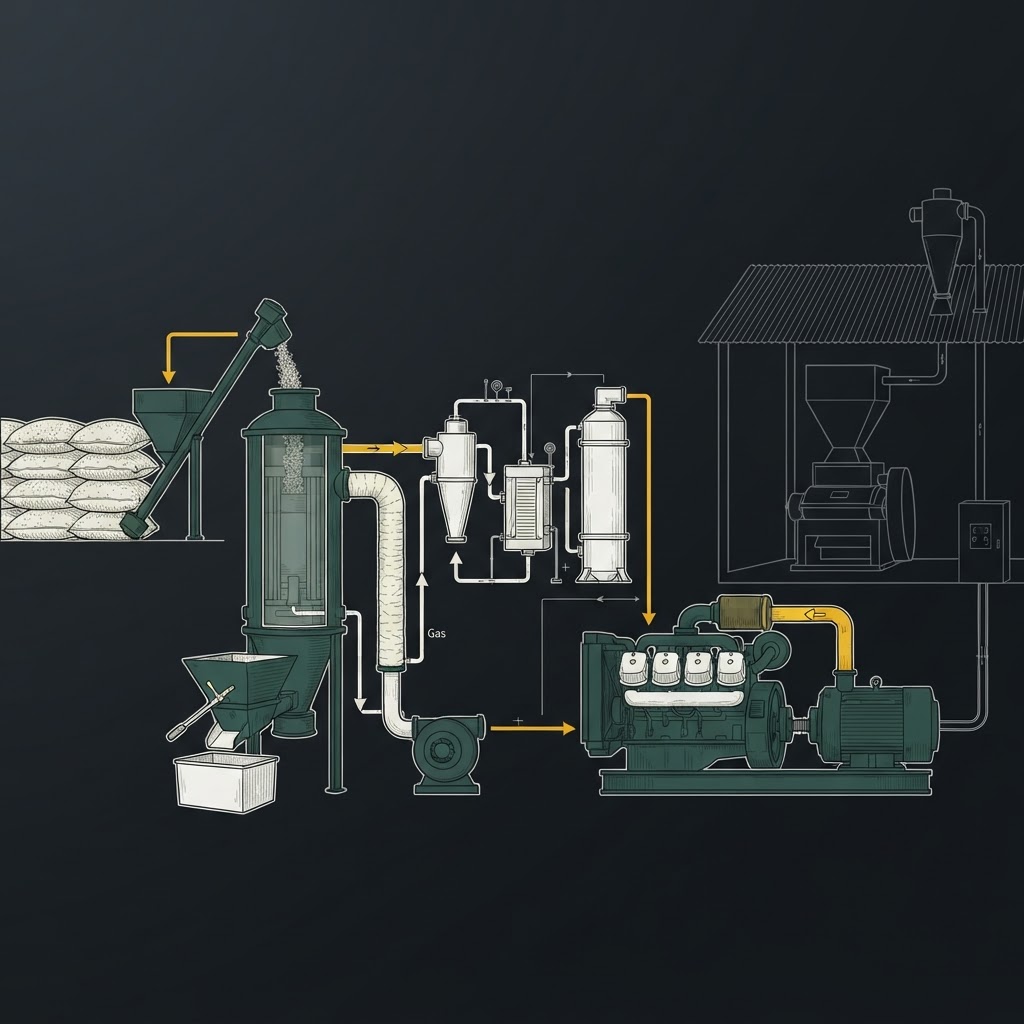
Agricultural Waste Gasification: Which Residues Work
Agricultural waste gasification, feedstock first: which crop residues gasify cleanly, which slag the reactor, and the LCOE numbers from deployed projects.
Read note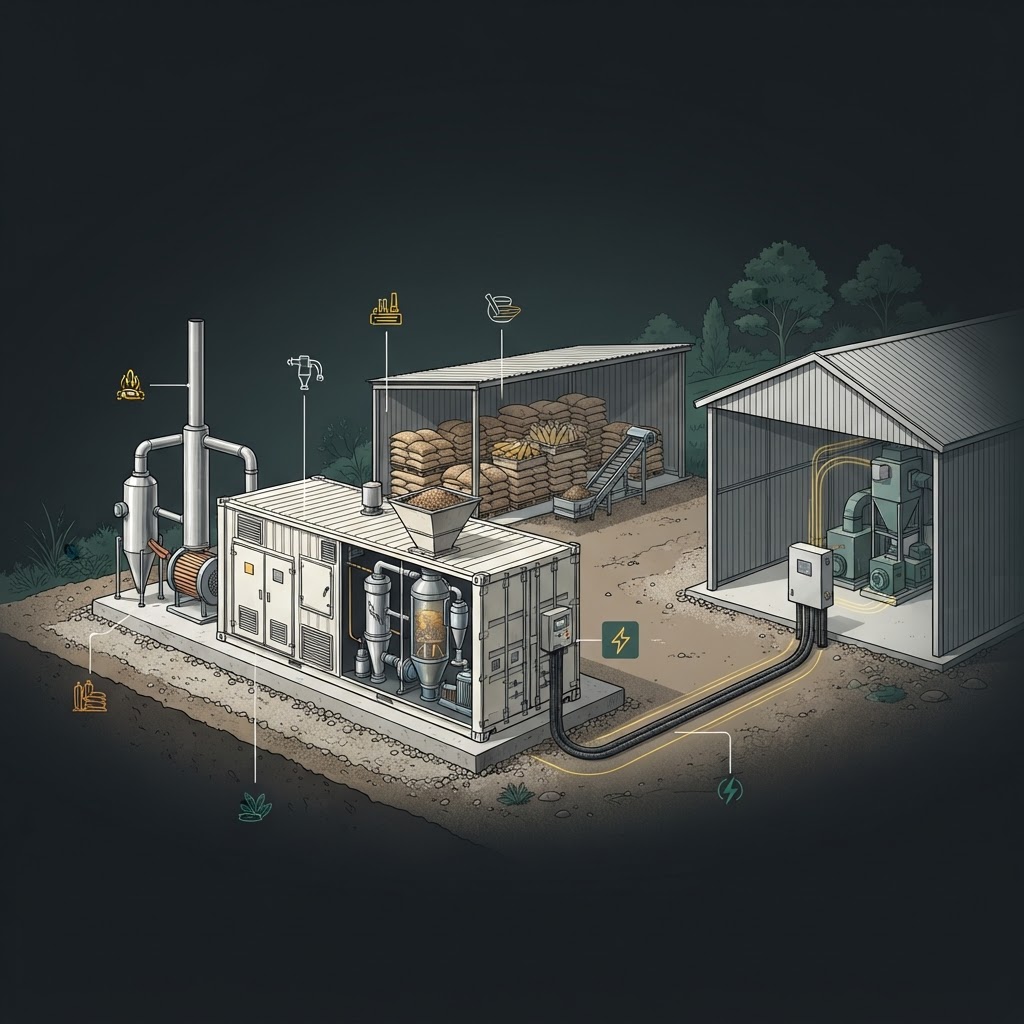
Waste to Energy for Emerging Markets: A Project Guide
Waste to energy for emerging markets: match the route to your feedstock and scale, with real kWh per tonne, LCOE benchmarks and the four failure modes.
Read note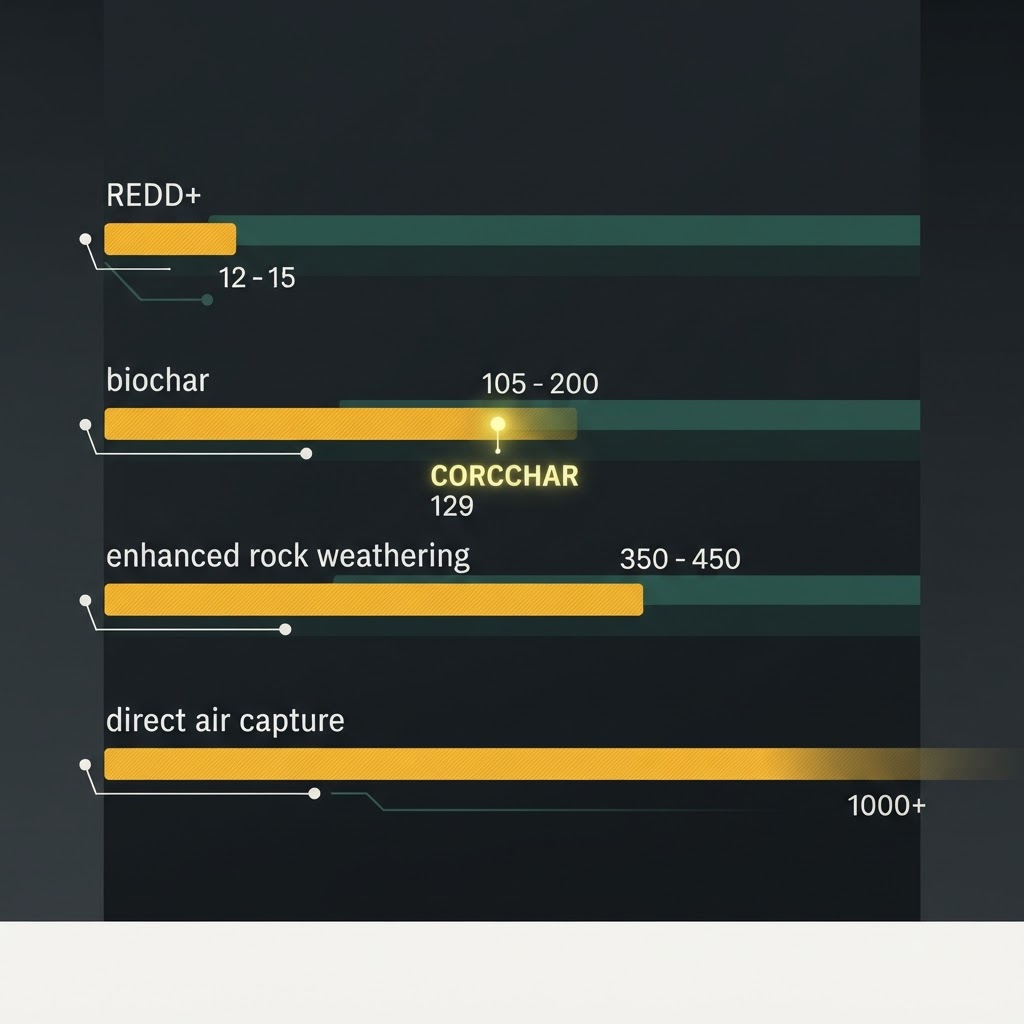
Biochar Carbon Credit Price Per Ton: 2026 Benchmarks
Biochar carbon credits run about 100 to 250 dollars per tonne in 2026. What sets your number: origin, production route, permanence, co-benefits and MRV.
Read note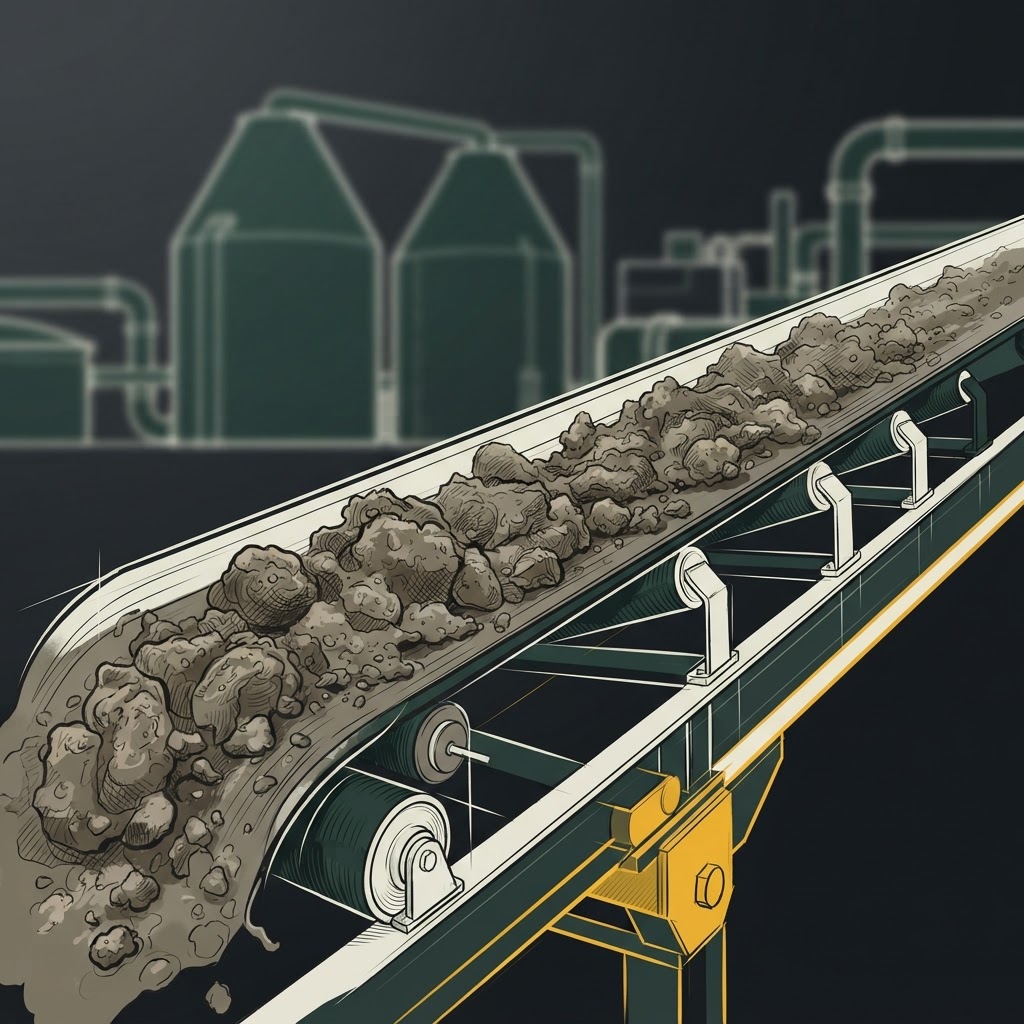
What Happens to Sewage Sludge After Treatment? 4 Routes
What happens to sewage sludge after treatment: farmland, landfill, incineration or thermal recovery. Germany closes the farm route in 2029.
Read note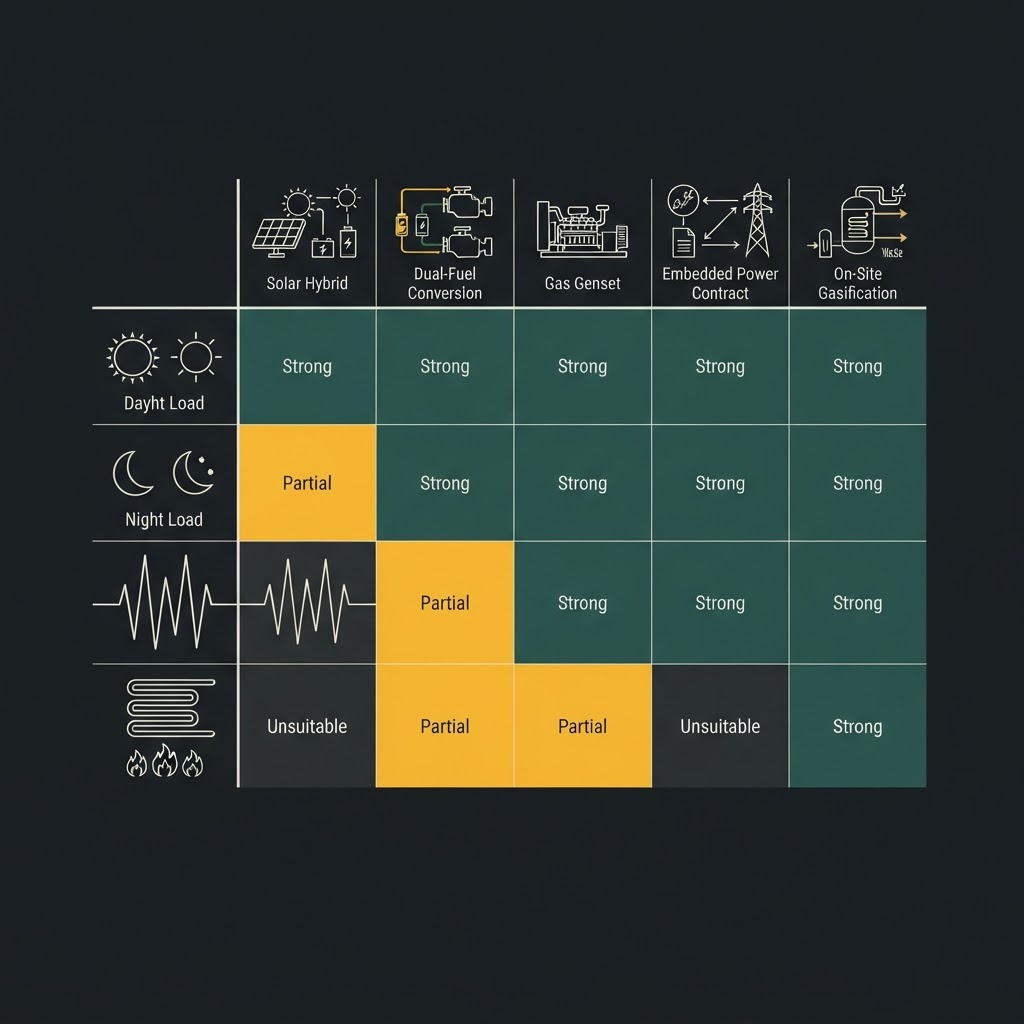
Diesel Generator Alternatives for Business in Nigeria
Five real diesel generator alternatives for Nigerian businesses: solar hybrid, CNG dual-fuel, gas gensets, embedded power and on-site waste-to-energy.
Read note
Are Biochar Carbon Credits Reliable? A Buyer's Checklist
Are biochar carbon credits reliable? Yes as a pathway, not automatically as a purchase. The plant decides. What to verify before you pay for a tonne.
Read note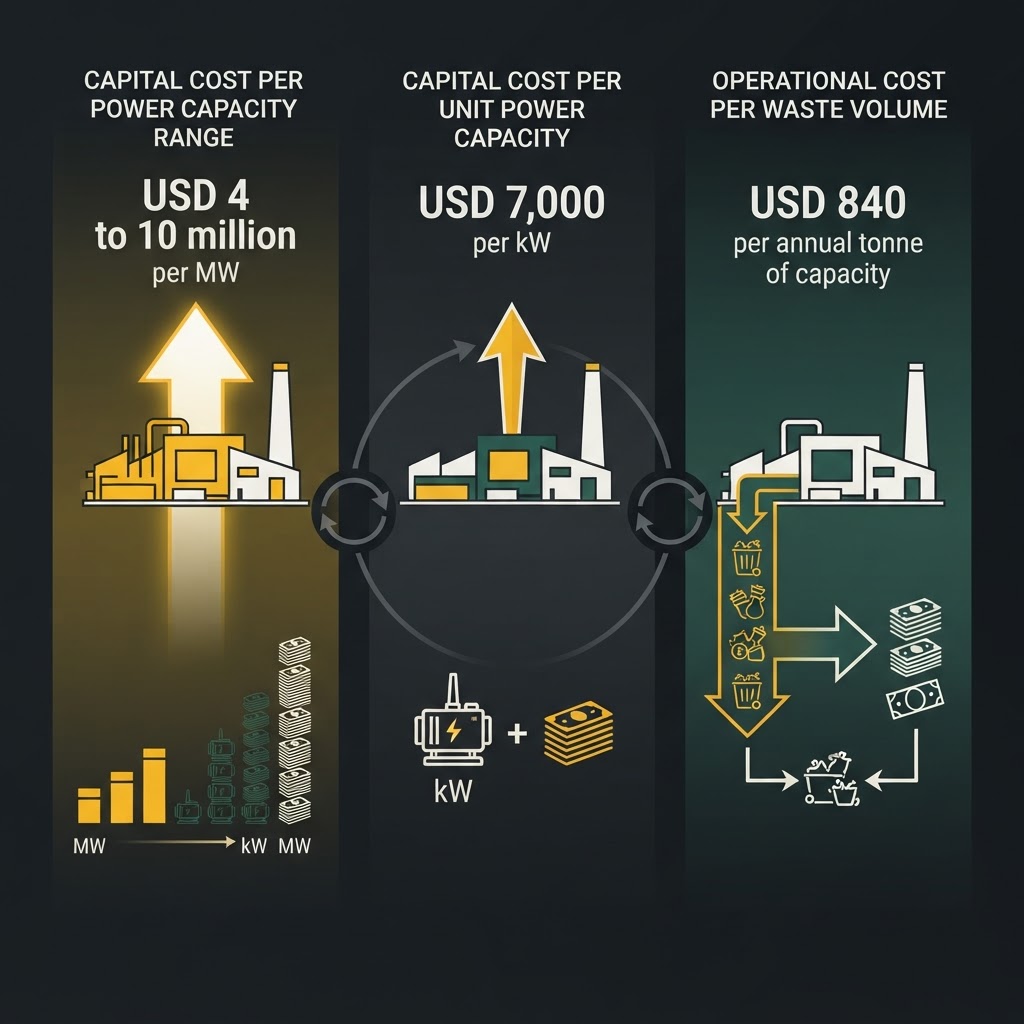
Waste to Energy Plant Cost: Capex, Opex and Real Prices
What does a waste to energy plant cost? Real 2025 order values, capex per kW and per annual tonne, opex, and the cost line most models leave out.
Read note
How to Sell Biochar Carbon Credits: Producer's Playbook
A producer's playbook for selling biochar carbon credits: eligibility, registry choice, MRV evidence, end use proof and the routes to a paying buyer.
Read note
Sewage Sludge Disposal Cost: What Drives the Price
Sewage sludge disposal costs 150 to 350 EUR per tonne of dry solids to incinerate. The four drivers behind that number, and the levers that move it.
Read note
Biochar Carbon Credits: 2026 Market, Price and Standards
Biochar carbon credits in 2026: what a tonne costs, which standard to certify under, who is buying, and the supply gap that decides project economics.
Read note
How Do Biochar Carbon Credits Work? Pyrolysis to Tonne
How biochar carbon credits work: pyrolysis, H/Corg permanence, the deductions that turn biochar into net tCO2e, and the verification chain to issuance.
Read note
Is Waste to Energy Profitable? The Revenue Stack, Ranked
Is waste to energy profitable? The gate fee, not the megawatt, decides. Real capex, opex and IRR numbers, and the four ways the business case breaks.
Read note
Solar vs Diesel Generator Cost in Nigeria: 5-Year Math
Solar vs diesel generator cost in Nigeria, repriced at the NBS May 2026 diesel average of N3,277.47 per litre. Full five-year model, every input sourced.
Read note